
Riding Crops and Whips: Types, Correct Use, and How to Choose the Right One
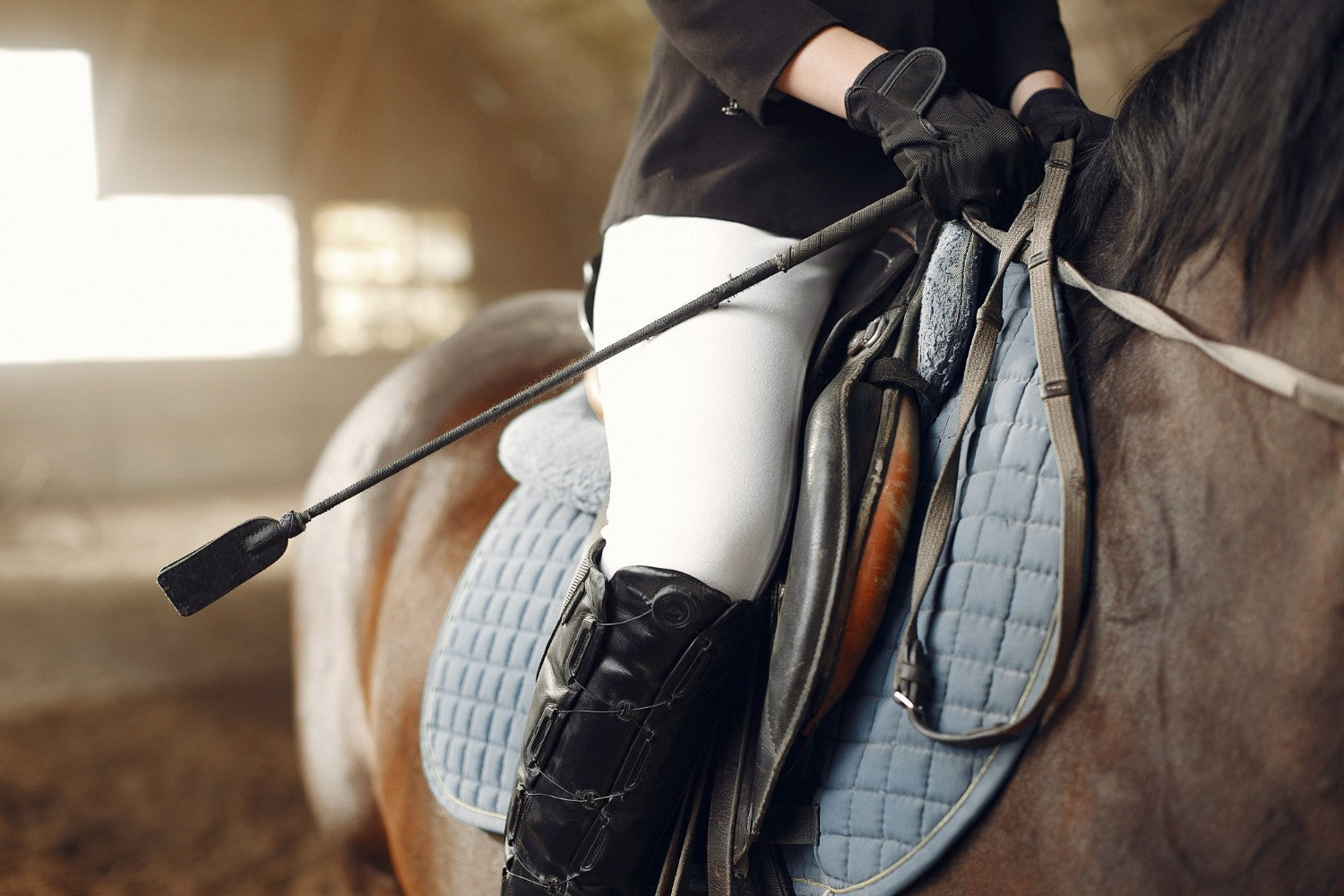
Few pieces of equipment are as widely used and as widely misunderstood as the riding crop. A riding crop is a short, rigid whip without a lash, designed to back up the leg aids and refine communication between rider and horse. Used correctly, it is a precision tool that asks for a clearer response; used poorly, it teaches a horse nothing at all. Whether you ride dressage, jump, lunge youngsters, or work cattle, choosing the right crop or whip and understanding how to use it makes a real difference to your schooling. This guide covers the main types, how to choose, and how to use one humanely.
What Is a Riding Crop?
A riding crop is a short type of whip, usually between 60 and 75 centimetres long, with a firm shaft and a small leather or fabric keeper (the "popper" or flap) at the end. Unlike a stock whip or a lunging whip, a crop has no trailing lash. Its job is not to drive a horse forward from a distance but to reinforce the leg aid the moment the rider applies it, so the horse learns to respond to a lighter cue over time.
The crop sits within a wider family of artificial aids. As the reference on crops and whips notes, the crop is closely related to the dressage whip and hunting whip but is purpose-built for in-hand reinforcement behind the leg or for a quick tap on the shoulder. Think of it as an extension of your aids rather than a separate instrument of correction.
Types of Riding Crops and Whips
Riders often use "crop" and "whip" interchangeably, but each discipline has a tool suited to its needs. Knowing the differences helps you buy the right one rather than the nearest one.
Jumping Bat / Crop
The shortest of the crops, a jumping bat is typically 45 to 65 centimetres with a wide flap at the end. The broad flap makes a clear sound and gives a light, slapping contact without much sting, which is why it is favoured over fences. The short length means it can be carried without interfering with the rein contact during a jumping round.
Dressage Whip
A dressage whip is longer and more flexible, usually 90 to 110 centimetres, so the rider can apply it just behind the leg without taking a hand off the rein. This precision is essential for lateral work and for refining a horse's response to the leg. If you school regularly, a well-balanced dressage whip is one of the most useful tools in the dressage rider's kit.
The legal length for competitions is 110cm including the popper/tassle.
Lunging Whip
A lunging whip is long, light and fitted with a lash, designed to extend the trainer's reach to the far side of a lunging circle. It is never used to strike the horse; it simply directs energy, reinforces voice commands from the ground and helps to keep the horse out on the circle. A good lunging whip is balanced enough to hold for a full session without tiring the wrist. You will find purpose-made options among our lunging and training aids.
Hunting Crop / Showing Canes
The traditional hunting crop has a curved horn handle and a long thong with a lash, historically used to manage hounds and open gates as much as to ride. Today it is largely a showing and traditional-turnout item, prized for its craftsmanship and leather quality. Showing canes (leather and bamboo) are more commonly seen in the showing classes these days and are a more available, economic option compared to the traditional hunting canes.
Stock and Bull Whips
In a South African working context, the stock whip and bull whip remain part of everyday life on the farm and in mounted stock work. These are long-lashed whips used to direct cattle through sound and movement, not to make contact with the animal. They demand skill to use safely and are a world apart from the schooling crop, even though they share the "whip" name.
How to Choose the Right Riding Crop
The best crop for you depends on your discipline, your horse, and the feel you prefer in your hand. A few practical considerations:
- Length: Match the length to the job. Short bats for jumping, long whips for dressage and in-hand work. A whip that is too long for jumping will catch on your horse's flank; one too short for dressage forces you to break your rein contact to use it.
- Balance: A quality crop feels weighted towards the handle so it sits quietly in the hand and can be applied with a small flick of the wrist. Cheap, poorly balanced crops feel top-heavy and clumsy.
- Grip: Rubber, leather, or moulded handles each have their followers. In the South African heat and dust, a textured grip that holds in a sweaty or gloved hand is worth paying for.
- Material: Fibreglass cores wrapped in nylon or leather offer the best blend of flex and durability. A genuine leather popper lasts longer and makes a cleaner sound than cheap synthetic flaps.
- Discipline rules: Competition bodies regulate whip length and type. Dressage in particular limits whip length, and many showing classes ban them altogether. Always check the current rules for your discipline before competing.
Using a Riding Crop Correctly and Humanely
A riding crop is an aid, not a punishment. Its purpose is to make a cue clearer, applied immediately after a leg aid the horse has ignored, so the horse learns to respond to the lighter aid next time. The timing matters far more than the force: a light tap given at the exact moment is worth more than a hard one given a second too late.
A few principles keep crop use fair and effective:
- Use it behind the leg or on the shoulder, never on the head, neck, or anywhere sensitive.
- Reinforce, then reward. The instant the horse responds, soften and praise so it understands the lesson.
- Never use a crop in anger or out of frustration. A horse that is confused, frightened, or in pain will not learn from being hit.
- Carry it ready in the schooling hand so you can apply it without disrupting your position or contact.
Responsible aid use sits at the heart of good horsemanship. The British Horse Society's horse care and welfare guidance is a sound reference on training within the horse's physical and mental wellbeing. A crop should always make your riding clearer and kinder, not harsher.
Crops and whips work alongside your other aids, including the bit and your seat. If you are reviewing your tack as a whole, our guide to horse bits and how to choose the right one is a useful companion read, as is our guide to choosing the right stirrups for a secure, balanced position.
Caring for Your Crop or Whip
A good crop will last for years with minimal care. Wipe down leather poppers and handles after dusty or wet rides, and treat genuine leather occasionally with a suitable conditioner to stop it drying and cracking. Store crops and whips hanging straight or laid flat, never bent or leaning under their own weight, as a permanent kink ruins the balance. Keep lunging and stock whips coiled loosely so the lash does not develop tight curls.
Find Your Riding Crop at Solo Saddlers
At Solo Saddlers we have spent 35 years making and supplying quality saddlery for South African riders, and our staff ride across endurance, jumping, dressage, and racing. We know the difference a well-made, well-balanced crop makes. Browse our full range of crops and whips to find the right tool for your discipline, and explore the rest of our horse riding gear while you are there. If you are unsure which crop or whip suits you and your horse, get in touch with our team. We are riders ourselves, and we are always happy to help you choose the right kit.


