
Horse Boots: Which Type Your Horse Actually Needs and When to Use Them
Ask ten riders at any South African yard what horse boots they use and you will get ten different answers. Some strap a set of brushing boots on for every ride without thinking twice. Others swear their horse has never needed a boot in fifteen years. Both can be right, because horse boots are not a blanket solution. They are a targeted tool, and the trick is knowing which type does what, and when a badly chosen boot is doing more harm than good.
After 35 years of making saddlery, we have seen horses come right after a boot change, and plenty more with rubs, heat damage and pressure marks from the wrong boot left on too long. Here is a practical guide to choosing horse boots that earn their place in your tack box.
What Horse Boots Are Actually For
Horse boots do one of three jobs: they protect against impact from the horse's own limbs, they protect against impact from the outside world, or they provide support and therapy. The mistake most riders make is buying a boot for the wrong job.
A horse that interferes at trot needs a strike pad in a specific place. A horse loading onto a truck for a six-hour drive needs full-length coverage that stays put. A horse coming back from a tendon strain needs something different again. One boot does not cover all three, and it is worth being honest about which problem you are solving before you spend money.
The Main Types of Horse Boots
Brushing Boots
Brushing boots are the workhorse of the category and the most commonly used horse boots in South Africa. They protect the inside of the cannon bone and fetlock from the opposite hoof, exactly where a horse that "brushes" will strike itself. Look for a reinforced strike pad down the inside of the boot. Young horses, horses with imperfect conformation, and any horse doing fast or lateral work are the usual candidates.
Tendon and Fetlock Boots
Tendon boots sit on the front legs and shield the back of the leg where the superficial flexor tendon runs. They are the standard choice for jumping, because a horse that hangs a foreleg can catch itself on a pole with real force. Most are open-fronted by design: the horse still feels a rap on the front of the leg and learns to pick up, but the vulnerable tendon behind is covered. Fetlock boots are the hind-leg equivalent, protecting the joint where hind limbs strike each other over a fence.
Overreach or Bell Boots
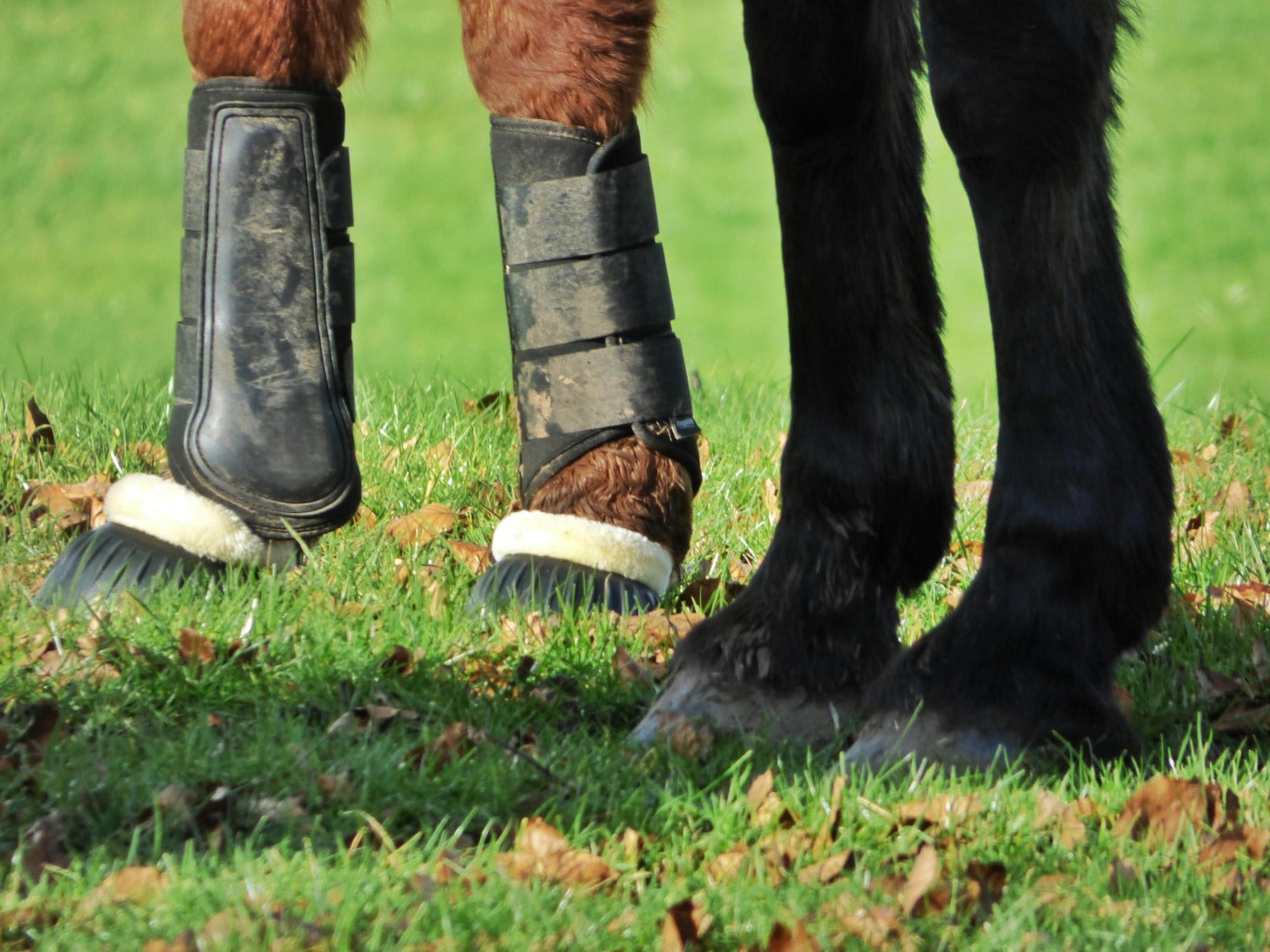
Overreach boots, also called bell boots, are the rubber bells that sit over the pastern and cover the heel bulbs and coronet. They stop a hind hoof from clipping the back of a front foot, which is one of the most common causes of a pulled shoe and a nasty heel injury. If your farrier keeps reporting overreach damage or your horse regularly loses front shoes in the paddock, bell boots are the answer. They are cheap insurance against an expensive vet call.
Travel and Trucking Boots
Transport is where more horses get hurt than most owners expect. Travel boots run from below the knee or hock down over the coronet, giving full-length cover for the scrambling that happens in a moving vehicle. Padding matters more than in any other boot, and so does a fastening that will not work loose over a long haul. Our trucking gear is built around exactly that, and rider Lichelle West put ours through a proper test in her review of the Solo Ultimate Trucking Boots.
Knee, Hock and Ice Boots
Knee boots protect the front or the inside of the knee against bumps and falls, and are worth having if you hack out on tar or hard gravel, or if you have a horse with a high stepping action. Hock boots are usually a stable item, for horses that knock their hocks lying down in a tight box. Ice and cooling boots pull heat out of the lower leg after hard work, and have become common among endurance and eventing riders here. They are a recovery tool, not a working boot, and they do not replace veterinary advice on a leg that is genuinely sore. The British Horse Society's horse care and welfare guidance is a sound starting point on recognising lameness and managing routine leg health.
Horse Boots or Bandages?
This is the question we get asked most often, and the honest answer is that it depends on your skill. Boots are quicker, more forgiving and far harder to get dangerously wrong. Bandages, applied correctly over suitable padding, give even support across the whole lower leg and are excellent for stable use.
The catch is that badly applied bandages cause tendon damage. Too tight, uneven tension, or wrapped over unpadded skin, and you create the exact injury you were trying to prevent. If you have not been taught properly, use boots. If you have, our bandage range covers stable and exercise wraps. Wikipedia's overview of horse leg protection is a useful reference on how the boot and wrap types compare.
How to Fit Horse Boots Properly
A well-chosen boot fitted badly is worse than no boot at all. A few rules we hold to:
- Snug, not tight. You should be able to slide a finger between the boot and the leg at the top. Any tighter and you are restricting circulation.
- Straps face backwards and outwards. This stops the opposite hoof catching a strap and ripping the boot off mid-stride.
- Fasten from the top down, keeping even tension throughout.
- Check the height. A boot ending right on the fetlock joint will rub. It should sit above the joint or wrap fully around it.
- Take them off after work. Boots trap heat against the tendon, which is precisely what an overworked tendon does not need.
The principle is the same one that governs the rest of your tack room, as our guide to measuring for the right girth sets out: correct size, correctly positioned. Anything else creates a new problem.
Materials and South African Conditions
Our climate is hard on kit. Heat, dust, thorn and long dry spells all shorten the life of a boot, and what works in a European indoor school does not always survive a Highveld summer or a Karoo trail.
Neoprene moulds well and absorbs impact, but it holds heat and sweat: good for short schooling sessions, less so for long hot rides. Synthetic and PVC shells shed dust and water, wash off easily and stay lighter when wet, which makes them a favourite among endurance and trail riders. Leather is the most durable option and stands up to thorn and scrub better than anything synthetic, but it needs regular feeding to stay supple. Perforated and mesh-lined boots are worth the extra cost if your horse works hard in real heat.
Looking After Your Horse Boots
Boots caked in mud and sweat turn into sandpaper. Rinse synthetic boots after use and dry them out of direct sun, which perishes rubber and neoprene faster than anything else. Check strap fastenings regularly: a strap that has lost its grip will let a boot slip mid-canter, and a boot around the pastern is a genuine hazard.
Leather boots need the same care as the rest of your leather work. Clean off the sweat, let them dry naturally, and feed them with a conditioner before they crack. Our leather care range covers everything from saddle soap to dressings, and our hoof care products handle the other half of the job lower down.
Which Horse Boots Does Your Horse Actually Need?
Starting from nothing, this is the order we would buy in: brushing boots for everyday schooling, overreach boots if your horse pulls shoes or shows heel damage, tendon and fetlock boots once you are jumping regularly, and travel boots as soon as you start going to shows. Everything after that is discipline-specific.
Endurance riders should think about weight and drainage above all, because a boot that holds water and grit on a 60km ride causes more damage than it prevents. Show jumpers need open-front tendon boots and matching fetlock boots. Western and trail riders often get away with less, though overreach boots on rough ground are still sensible. Riders spending long hours in the saddle should look at their own legs too, and our guide to chaps and gaiters covers that side of things.
Find the Right Horse Boots at Solo Saddlers
We have been making and selling saddlery in South Africa for 35 years, and the people who pick our stock are riders themselves, competing in endurance, jumping, trail and racing. That is why our horse boots and bandages range is built around what holds up in local conditions rather than what looks good in a catalogue.
If you are not sure which horse boots suit your horse, your discipline or your ground, get in touch. Tell us what your horse is doing and where it is going wrong, and we will point you at the right boot rather than the most expensive one. Browse the full horse boots collection online, or contact the team and we will help you get it right first time.


