
Horse Grooming Kit: What Every Rider Actually Needs and How to Use It
Ask ten riders what belongs in a horse grooming kit and you will get ten different answers, most of them shaped by whatever they inherited at their first yard. A good horse grooming kit is not about owning the most tools. It is about owning the right ones, knowing what each is actually for, and using them in an order that does the job properly. Get that right and a fifteen-minute groom will tell you more about your horse's health than an hour of watching him over the stable door.
After thirty-five years of putting kits together for South African riders, the same handful of items come up again and again. Here is what earns its place, and how to build a kit that suits our climate rather than a British one.
Grooming Is a Health Check, Not a Beauty Treatment
The cosmetic side of grooming is the least interesting part of it. Working a brush over your horse daily lifts dirt out of the coat, spreads the natural oils that keep it weatherproof and stimulates circulation. More importantly, it puts your hands and eyes on every part of the horse, every day.
That is how you find the heat in a fetlock before it becomes a lameness, the tick behind an elbow, or the girth rub that will turn into a sore by Saturday. The British Horse Society treats consistent daily handling and observation as a foundation of horse care, and for most owners grooming is when that observation actually happens.
What Actually Belongs in a Horse Grooming Kit
Curry Comb
The first tool out of the box. A rubber or gel curry comb is used in small circular motions over the muscled parts of the body to lift caked mud, loose hair and scurf up to the surface of the coat. Keep it to the neck, shoulders, barrel and hindquarters. It does not belong on the face, over bony areas, or below the knee and hock, where there is no muscle to cushion it.
Gel curry combs are softer and suit thin-skinned, clipped or sensitive horses that flinch away from a firmer rubber one. A curry comb also does double duty as the tool you drag your body brush across to clean it mid-groom.
Body Brush
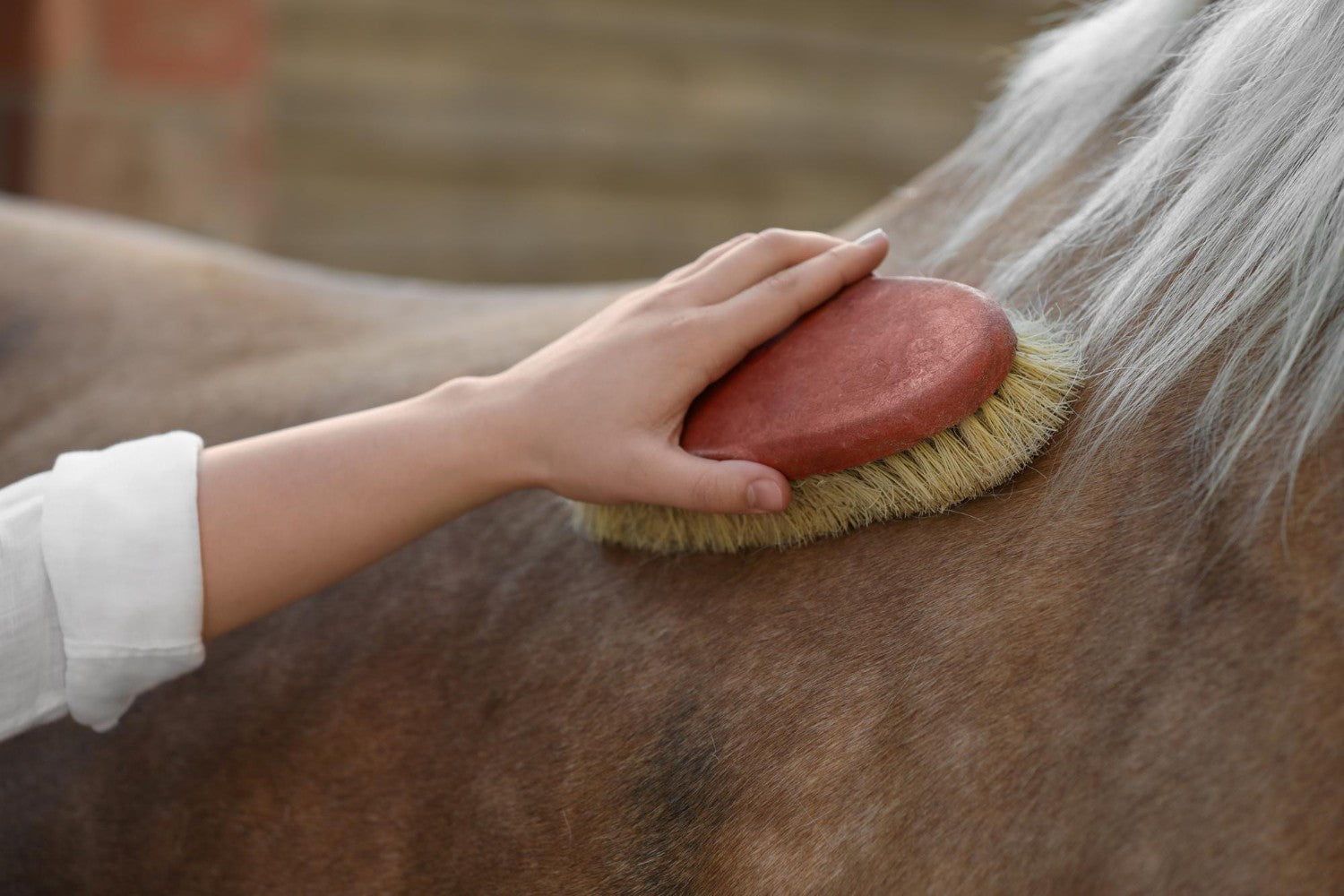
Soft, short, densely packed bristles that reach through the coat to remove the fine dust and scurf a curry comb leaves behind. This is the brush that produces shine, and the one you can use on the face, body, legs and any sensitive areas. Work in short, sweeping strokes in the direction of hair growth, and clean the brush against your curry comb every few strokes, otherwise you are just moving dirt around.
Dandy Brush
Stiff, long bristles. The stiffer bristles are well suited to manes, tails and around the hooves, and they stand up to heavy winter coats where a softer brush won't reach. Keep this brush away from the face and other sensitive areas.
Hoof Pick
The cheapest item in the kit and arguably the most important. Pick out all four feet before and after every ride, working heel to toe, down both sides of the frog and into the cleft. You are looking for stones, packed mud, loose clenches, a shifting shoe and the distinctive smell of thrush. Buy one with a stiff brush on the reverse and keep a spare, because hoof picks disappear. For recurring problems, our hoof care range covers hardeners, tar and conditioners.
Mane and Tail Comb
Use a wide-toothed comb or a purpose-made tail brush, and always start at the bottom of the tail, working upwards in sections. Starting at the top and dragging down rips out hair that takes two years to replace. A detangler or mane and tail conditioner sprayed in first makes an enormous difference on thick or sun-bleached tails.
Sponges
Carry at least two, and keep them strictly separate. One for the eyes, nostrils and muzzle, one for the dock. Colour-coding them is the simplest way to make sure nobody at the yard mixes them up. You can also buy 2 different shaped sponges. Having a separate sponge for applying fly repellent to sensitive areas is a handy item to have as well
Sweat Scraper
After a wash or a hard ride, run the flat edge along the neck, barrel and quarters in the direction of the coat to pull the water off. A scraped horse dries far faster, which matters on a cold highveld evening when a wet coat means a chilled horse.
Building a Kit for South African Conditions
The Spring Shedding Change-Over
From late July through September, winter coats start to blow, and for about six weeks the rubber curry comb and shedding blade do more work than every other tool combined. Groom outdoors and stand upwind. This is also when skin problems hiding under a heavy winter coat finally become visible, so go over the horse carefully rather than just stripping hair.
Dust, Sand and Sweat
Our conditions are hard on coats. Highveld dust in the dry months and fine sand at the coast work deep into the hair, and a horse in regular work sweats far more than the average northern-hemisphere horse. The answer is a thorough body brush and a damp sponge or rubber grooming mitt after work, not more shampoo, which strips the oils that keep a coat healthy. We have covered when a wash is genuinely warranted in our guide to choosing the right horse shampoo.
Skin, Ticks and Biting Insects
Build a checklist into every groom: the girth area, the midline of the belly, the base of the mane and tail, and under the jaw. Those are the spots where ticks attach and insect irritation shows first. From spring onwards biting midges become a serious nuisance across most of the country, and grooming is when you will notice a horse starting to rub. Our fly protection range covers masks, sheets and repellents, and there is more detail in our article on keeping your horse comfortable during fly season. Anything hot, weeping or spreading is a job for your vet rather than a brush, though our veterinary range covers everyday wound care and skin treatments.
Ready-Made Kit or Build Your Own?
A complete grooming kit is the simpler starting point. Everything is matched, it lives in one box, and it makes an excellent gift for a new rider. Children's kits in particular are worth buying as a set, because the tools are sized for smaller hands. Building your own makes more sense once you know your routine: you replace pieces as they wear out and spend properly on the two or three tools you use daily.
Whichever route you take, one rule matters more than the rest: keep a separate kit, or at minimum separate brushes, for any horse with a skin condition. Shared grooming kits move ringworm and other skin infections around a yard faster than almost anything else.
A Working Order That Saves Time
Grooming in a consistent sequence is quicker and means you never skip a section:
- Pick out all four feet.
- Curry comb over the muscled areas in circular motions.
- Body brush over the whole horse, including the face, cleaning the brush on the curry comb as you go.
- Dandy brush to flick off any dried mud, and to brush the mane and tail and hooves.
- Comb out the mane and tail from the bottom up.
- Damp sponge for eyes, nostrils and muzzle, then the second sponge for the dock.
- Run your hands down each leg, feeling for heat, filling or a flinch.
Finish by checking the tack you are about to use. Leather that gets sweat on it daily needs the same routine attention the horse does, which our leather care products are there for.
Look After the Kit Itself
Brushes are working tools and they get filthy. Wash them about once a month in warm water with a mild soap, rinse well, and stand them bristles-down to dry so water does not sit in the backs. Replace rubber curry combs once they warp, and retire a body brush when the bristles splay outwards, because at that point it is only skimming the surface.
Store the kit in a closed box rather than an open bucket, which collects dust and dew, and keep it away from your rugs so you are not transferring loose hair and grit into clean horse clothing.
Start Your Grooming Kit at Solo Saddlers
Everything covered here is in our grooming collection, from individual curry combs, brushes, sponges and sweat scrapers through to complete grooming kits for adults and children. We have chosen tools that stand up to daily yard use in South African conditions, because our own staff ride and groom with them.
If you are not sure where to start, or you are putting a first kit together for a young rider, get in touch. We would far rather help you buy the right five items than the wrong fifteen. Browse the full horse grooming range online, with delivery across South Africa.
Further reading: Wikipedia's overview of horse grooming covers the traditional tools and clipping styles.


