
Horse Shampoo: How to Choose the Right Wash for Mane, Tail, and Coat
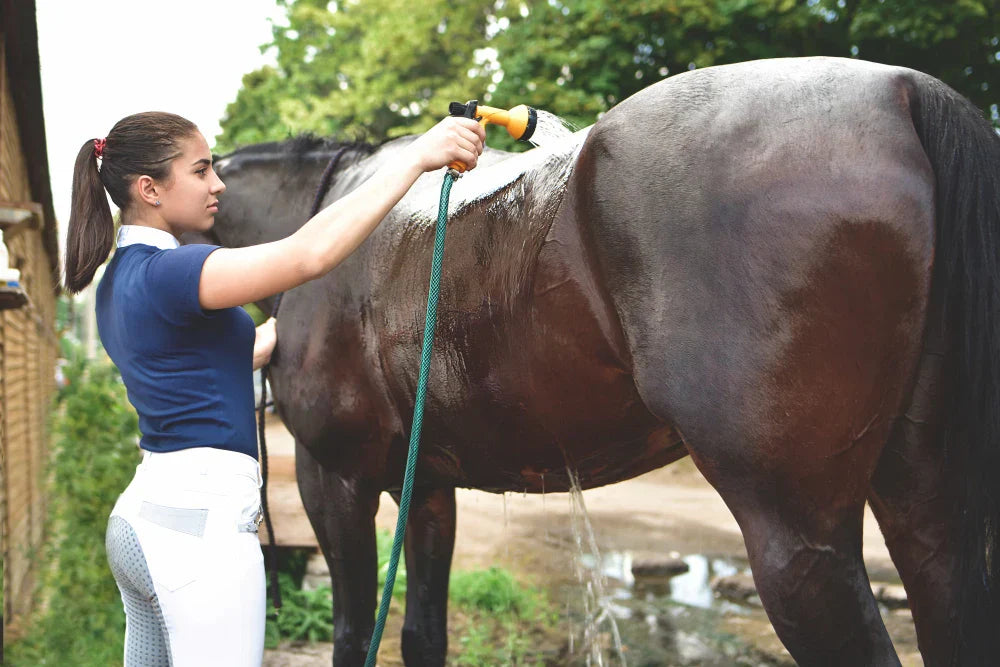
Bath time should leave your horse with a clean, soft, shiny coat — not skin irritation, dry hair, or a tangled mane. The right horse shampoo does more than rinse off the day's mud. A well-formulated wash protects the natural oils that keep the coat weatherproof, soothes the skin, and conditions the long hair of the mane and tail so it grows long and resists breakage. The wrong one strips those oils, leaves residue, and can trigger itching that lasts for weeks.
South African horses face a particularly demanding environment. Hot summers, dry winters, sandy paddocks, midges, and thorny veld all take their toll on coat condition. The horse shampoo you choose needs to handle real grime without being so harsh that it damages the skin barrier underneath. This guide walks through what to look for, the different formulations available, and how to bath your horse correctly so the work pays off.
What Horse Shampoo Actually Does
Horse shampoo is not human shampoo with a horse on the label. The pH of equine skin sits around 7.0 to 7.4, slightly more alkaline than human skin (around 5.5). A shampoo formulated for human hair will be too acidic, which over time disrupts the protective lipid layer on the horse's coat and leaves the skin prone to dryness, dandruff, and irritation. Equine-specific shampoos are pH-balanced for that 7.0+ range.
A good horse shampoo should:
- Lift dirt, sweat, and arena sand without aggressive sulphates
- Preserve the natural sebum that gives the coat its shine and water resistance
- Rinse out cleanly, with no soap residue that attracts dust or causes itching
- Condition the mane and tail so the long hair stays detangled and strong
If a wash leaves the coat looking dull a day later, or the horse starts rubbing against the stable wall, the formulation is wrong for that horse. Switch products before the irritation becomes a problem.
Types of Horse Shampoo
General-Purpose Shampoos
Daily-use or weekly-use shampoos are the workhorses of the wash bay. They are mild, neutral, and designed for routine cleaning after work or before a lesson. Look for a product that lists glycerine, aloe vera, or panthenol on the label — these are humectants that put moisture back into the hair shaft. Avoid anything heavy on sodium laureth sulphate (SLES) if your horse has sensitive skin; it cleans aggressively but at a cost.
Whitening and Brightening Shampoos
Greys, palominos, and horses with white socks need a purple-tinted whitening shampoo to neutralise yellow staining. The violet pigment cancels yellow tones in the same way purple shampoo works for blonde human hair. Leave it on for two to five minutes before rinsing. These shampoos are excellent before a show but too drying for weekly use.
Medicated and Anti-Itch Shampoos
For horses with sweet itch, rain scald, mud fever, or fungal skin conditions, a medicated horse shampoo containing chlorhexidine, iodine, miconazole, or tea tree oil targets the bacteria or fungi causing the irritation. Use them as directed (often two to three times a week for two weeks, then taper) and always rinse thoroughly. If the skin condition does not respond within ten days, consult your vet rather than escalating product strength.
Conditioning Mane and Tail Shampoos
The mane and tail need different treatment from the body coat. The hair is longer, often coarser, and more prone to breakage. A dedicated mane and tail horse shampoo combines a gentle cleanser with extra conditioning agents — silk proteins, keratin, or argan oil — to keep the strands detangled. Follow with a leave-in detangler before brushing, and never drag a brush through dry, knotted hair: it breaks far more strands than people realise.
Waterless Shampoo
For winter washes, sensitive horses, or quick spot-cleaning, a waterless or rinse-free horse shampoo lets you clean specific areas without a full bath. Spray on, rub in with a soft cloth, and towel off. Useful for cleaning sweat marks under the saddle area between rides.
Horse Shampoo for Hair Growth
One of the most common questions in our wash bay is whether a particular shampoo will make a horse's mane and tail grow longer. The honest answer: shampoo does not grow hair. Hair grows from the follicle, and growth rate is governed by genetics, nutrition, and overall health. What shampoo can do is protect the hair that already exists so it does not snap off before it reaches its full length.
Length comes from preventing breakage. Conditioning shampoos with biotin, panthenol, MSM, or silk proteins coat each strand and reduce friction during brushing. Combine that with:
- A balanced diet with adequate protein, biotin, zinc, and omega-3 fatty acids
- Loose plaiting or tail bagging to prevent the wind whipping hair against fences
- Detangling sprays before brushing
- Brushing the tail with your fingers first to remove the worst tangles
Hair that is well-conditioned and protected from mechanical breakage will reach its genetic maximum. That is the real "growth" benefit shampoo can offer.
How to Bath a Horse Properly
Even the best horse shampoo will not perform if it is applied incorrectly:
- Pick a warm day, mid-morning to early afternoon, so the horse can dry naturally before evening cools.
- Hose the coat thoroughly with lukewarm water before any shampoo. Cold water shocks the skin and stops the shampoo lathering properly.
- Dilute the shampoo in a bucket of warm water (one capful per five litres is a good starting point) rather than applying it neat.
- Sponge the diluted shampoo onto the body, working with the lay of the hair. Pay attention to the chest, between the front legs, behind the elbows, and the dock — these areas hold the most sweat and dirt.
- Lather the mane at the roots and work down. For the tail, dunk the entire tail in a bucket of shampoo water and swish — this is the most efficient way to clean it.
- Rinse, rinse, and rinse again. Soap residue is the leading cause of post-bath itching. Keep rinsing until the water runs completely clear.
- Sweat-scrape the excess water off and either walk the horse dry or use a cooler rug if there is any breeze.
Avoid the eyes and ears entirely — use a damp cloth for the face. Never bath a hot, sweating horse straight after work; let the horse cool first. The British Horse Society's guidance on common skin conditions is a useful reference if you spot anything unusual during a wash.
Common Mistakes to Avoid
Most shampoo problems are user errors, not product faults. Bathing too often (more than once a week for most horses) strips natural oils and leaves the coat dull. Skipping the rinse step leaves residue that itches and attracts dust. Using human shampoo, dish soap, or laundry detergent — all of which we have been asked about — damages the skin barrier and can cause real welfare problems. According to the research on equine coat condition, dietary protein, mineral status, and grooming frequency all visibly affect coat quality within four to six weeks.
Pairing Shampoo with the Rest of Your Grooming Routine
A bath is one piece of the grooming puzzle. The shampoo can only do so much if the rest of the routine works against it. Pair your wash with:
- A daily curry-and-brush routine to lift dirt and stimulate skin oil production — see our full grooming collection for brushes, curry combs, and sweat scrapers.
- Fly protection during summer months — fly bites cause rubbing, broken hair, and skin irritation that no shampoo can fix while the bites continue. Browse fly protection products.
- Clean rugs and saddle pads — a freshly bathed horse rolling in a sweat-stained rug undoes the wash within hours. Check our horse clothing and saddle pads.
- Regular tack cleaning — sweat and grease that stay on a girth or numnah will rub straight onto a clean coat. Our leather care range covers saddle soaps, conditioners, and oils.
Once you have a clean coat, the next time you tack up your girth and saddle pad will sit cleaner against the skin and the whole rig will perform better — fewer rubs, less heat build-up, and a happier horse under saddle.
Find the Right Horse Shampoo at Solo Saddlers
Solo Saddlers has been kitting out South African riders for over 35 years, and our staff are working riders themselves — we know the difference between a shampoo that sounds good on the bottle and one that actually delivers in a sandy Highveld wash bay. Whether you need a daily-use cleanser, a whitening shampoo for show day, a medicated wash for a skin condition, or a conditioning mane and tail shampoo, our grooming range has been chosen because it works on the horses we ride and the conditions we ride them in.
Not sure which to pick? Drop us a message and we will recommend the right horse shampoo for your horse's coat type, skin sensitivity, and how you ride. A good wash is a small investment that pays back every time you tack up.


