
Horse Girth Size Chart: How to Measure and Find the Perfect Fit
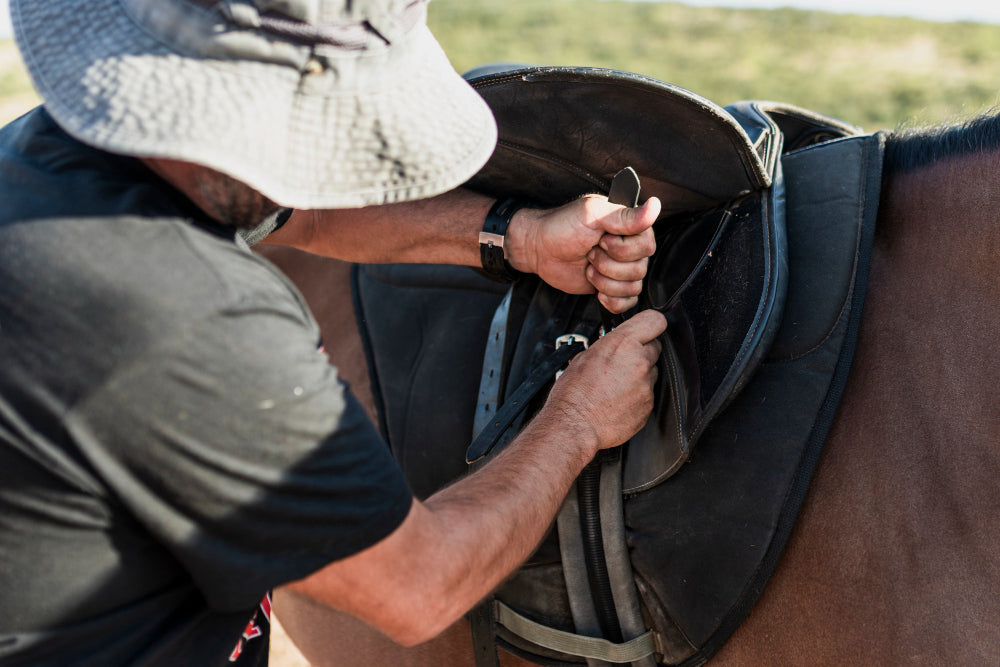
Getting the right girth size for your horse isn't just about comfort — it's about safety, saddle stability, and your horse's long-term wellbeing. An ill-fitting girth can cause rubbing, restricted movement, and even behavioural issues under saddle. Whether you're fitting an English girth, a western cinch, or an endurance girth, this guide will walk you through everything you need to know.
What Is a Girth and Why Does Size Matter?
The girth (or cinch, in western riding) is the strap that runs under your horse's barrel to hold the saddle in place. It sits just behind the front legs, in an area called the girth groove. A girth that's too short won't buckle securely; one that's too long will hang loose and allow the saddle to shift. Either way, you're compromising safety and your horse's comfort.
At Solo Saddlers, we stock a wide range of girths in various sizes, materials, and styles to suit every discipline - from dressage and jumping to endurance and trail riding.
How to Measure Your Horse for a Girth
You'll need a flexible measuring tape or a piece of string that you can measure afterwards. Here's the process:
Step 1: Position Your Saddle
Place the saddle on your horse's back without a girth attached. Make sure it's sitting in the correct position — the pommel should sit behind the shoulder blade, not on top of it.
Step 2: Measure from Buckle to Buckle
Run your measuring tape from the girth buckle on one side, under the horse's belly through the girth groove (about a hand's width behind the elbow), and up to the girth buckle on the other side. This gives you the total measurement.
Step 3: Check the Fit
The ideal girth should buckle roughly in the middle of the billets (girth straps) on both sides. If the buckles sit too high or too low, you'll need to adjust the size. Most riders aim for the buckles to sit about halfway up the billet straps, giving room for adjustment as needed.
Girth Size Chart: A General Guide
While every horse is different, here's a general guide based on horse height. Use this as a starting point, then fine-tune with actual measurements.
English Girth Sizes
- Ponies (12–13hh): 36–40 inches (90–100 cm)
- Small horses (13.2–14.2hh): 42–46 inches (105–115 cm)
- Average horses (14.2–16hh): 46–52 inches (115–130 cm)
- Large horses (16hh+): 52–56 inches (130–142 cm)
- Warmbloods and drafts: 54–60 inches (137–152 cm)
Western Cinch Sizes
Western cinches are typically shorter than English girths because the rigging sits differently. As a rough guide, subtract 16–20 inches from your English girth measurement to get your western cinch size.
- Ponies: 22–26 inches
- Average horses: 28–34 inches
- Large horses: 34–36 inches
Browse our full range of girths and cinches to find the right fit for your horse.
Common Girth Fitting Mistakes
Too Tight
A girth that's over-tightened restricts your horse's breathing and shoulder movement. Tighten gradually — do one hole up on each side at a time, and always re-check after mounting. You should be able to slide a flat hand between the girth and your horse's skin.
Too Far Forward
A girth sitting too far forward will press into the elbow and cause girth galls (sores). Make sure the girth sits in the natural groove behind the front legs.
Wrong Shape for the Horse
Horses with a forward girth groove may benefit from an anatomically shaped girth that curves away from the elbow. Round-bellied horses or those prone to the saddle slipping may need a contoured or anti-slip girth. If you're unsure which style suits your horse, our saddle fitting guide covers how saddle and girth work together.
Types of Girth Materials
Leather
Traditional, durable, and moulds to the horse over time. Requires regular cleaning and conditioning — see our leather care guide for tips. Leather girths are a popular choice for dressage and show jumping.
Synthetic / Neoprene
Easy to clean, lightweight, and often more affordable. Neoprene / Equiprene girths offer good grip and are popular for endurance and everyday riding. Some horses with sensitive skin may sweat more under neoprene.
String / Cord
Excellent breathability, making them a good choice in hot South African conditions. They allow air flow and reduce sweating but can be harder to clean.
Sheepskin Fleece
Naturally anti-bacterial and breathable. Sheepskin Fleece girths are prized for being gentle on sensitive horses and are widely used in endurance disciplines.
When to Replace Your Girth
Inspect your girth regularly for:
- Cracked or worn leather, especially near the buckle holes
- Fraying stitching or elastic
- Rust on buckles or hardware
- Loss of shape or padding compression
A worn girth is a safety risk. If you spot any of these signs, it's time for a replacement. Our saddle accessories range includes girth covers and buckle guards that can extend the life of your girth too.
Find the Right Girth at Solo Saddlers
Choosing the correct girth doesn't have to be complicated — measure carefully, consider your horse's build and your riding discipline, and don't be afraid to try a different style if something isn't working. At Solo Saddlers, we've been helping South African riders find the right gear for over 30 years.
Shop our full girth collection online, or get in touch with our team for personalised advice.
📞 +27 10 020 2863
💬 WhatsApp: +27 10 020 2863
📧 info@solosaddlers.co.za
🌐 www.solosaddlers.co.za


