
Fly Masks for Horses: How to Choose, Fit and Get Through Fly Season
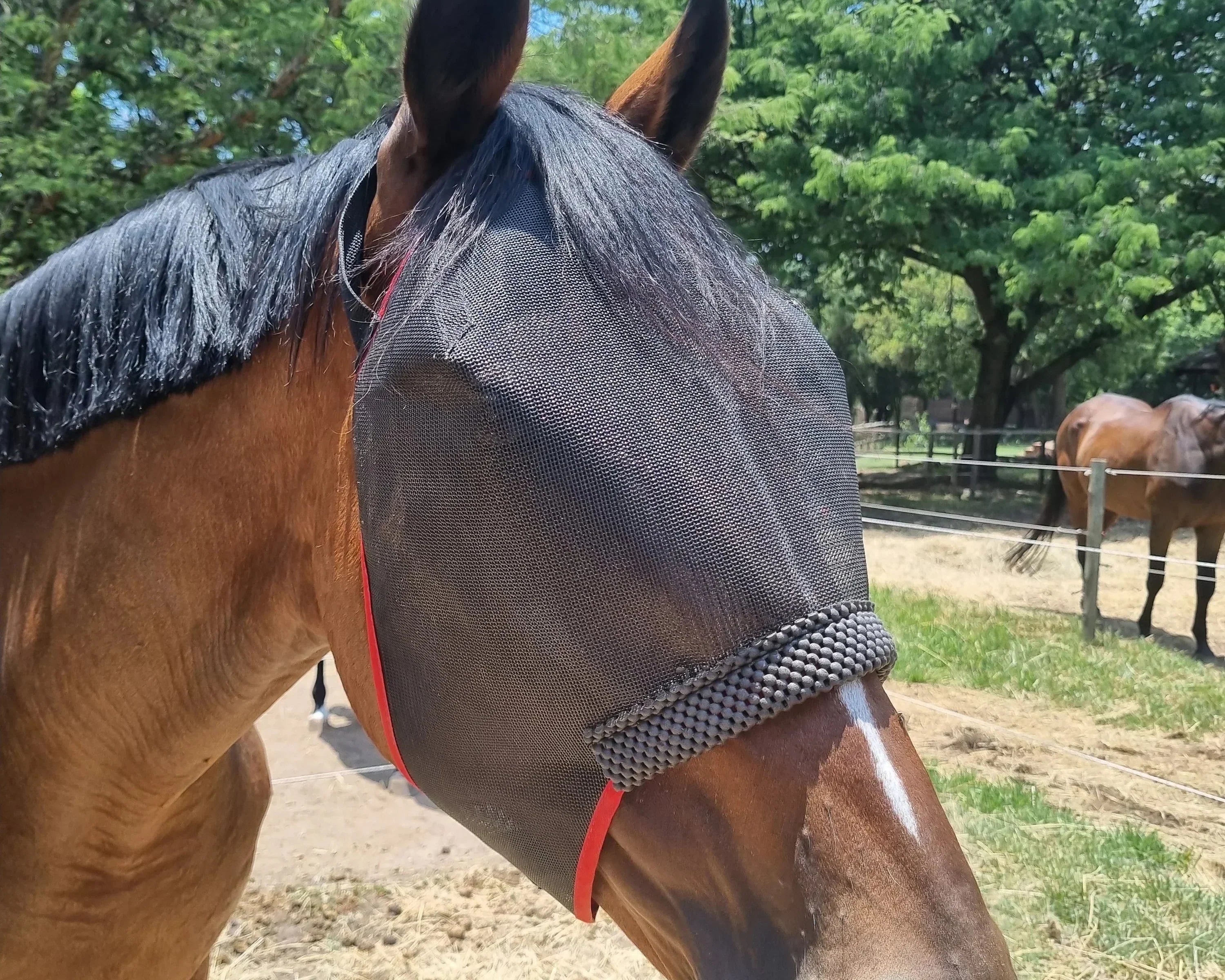
Ask any experienced groom what they would buy first when the weather turns, and most will say the same thing: a fly mask. Of all the fly protection on the market, fly masks for horses give you the most protection for the least money, and they work around the clock without you having to reapply anything. If your horse is shaking his head in the paddock, rubbing his face on the fence or standing nose-to-tail with a friend all afternoon, the flies have won. This guide covers the types available, how to fit one properly, and what else belongs in your summer kit.
Why a Fly Mask Is the First Thing to Buy
Flies are drawn to the moisture around a horse's eyes, and that is exactly where they do the most damage. They feed on tear fluid, carry bacteria from one animal to the next, and can trigger conjunctivitis and other eye infections. A horse that is constantly blinking and rubbing can also injure himself trying to get relief.
There is a second benefit South African owners should not overlook: sun. UV levels here are high for most of the year, and horses with pink skin around the muzzle and eyes burn easily. A good mesh mask cuts a meaningful amount of that exposure while still letting the horse see and hear normally. As the general description of fly masks notes, the mesh is fine enough that vision is only minimally impaired, and many designs use stitched darts to hold the fabric away from the eye itself.
The Main Types of Fly Masks for Horses
Walk into a tack shop and the wall of masks looks interchangeable. It is not. The differences come down to how much of the head is covered and how the ears are handled.
Standard Face Masks
The basic version covers the forehead, eyes and cheeks and fastens under the jaw with Velcro. It is the cheapest option and the right starting point for a horse out for part of the day, and it is the sensible one to buy as a spare.
Ear Pockets Versus Ear Holes
This is the distinction that confuses most buyers, and it matters more than the colour. Ear pockets enclose the ears in soft mesh. They are the better choice for horses bothered by midges and ticks biting inside the ear, and for anything prone to head-shaking. Ear holes let the ears poke through. They run cooler and suit horses who genuinely will not tolerate having their ears covered, which is a real and fairly common objection.
Neither is universally better. If your horse has never worn a mask, ear holes are usually the easier introduction. If you are dealing with sore, scabby ear tips by January, go for pockets.
Masks With a Nose Flap
A nose flap extends the mesh down over the muzzle. This is the option for horses with pink noses, bald faces or a history of sunburn, and it also keeps flies off the nostrils where they cluster. The trade-off is bulk and a slightly higher chance of the mask being rubbed off, so check the fit more often.
Padded and Comfort Masks
Comfort versions add fleece or a soft synthetic trim around the edges where the mask meets the face. If your horse has rubbed bald patches above the eyes or along the cheekbone with a plain mask, padding is usually the fix rather than going up a size.
Fly Fringes
A fringe hangs strands of cord or leather over the eyes, dislodging flies as the horse moves. It is not a substitute for a mask, since it offers no sun protection and nothing over the nose, but it is a sensible option for a horse who flatly refuses a full mask, or for short turnout. Fringes are available in soft cord, leather and Velcro-fitting versions.
You can compare the full range side by side in our fly protection collection.
How to Fit a Fly Mask Properly
A badly fitted mask causes more problems than no mask at all. Work through this quickly every time you put one on:
- Clearance at the eye. The mesh should never touch the eyelashes. Darts or moulded panels should hold it clear. If the lashes are folded against the mesh, the mask is too small or too loose.
- Two fingers under the jaw strap. Snug enough that it will not spin around the head, loose enough to slide two fingers underneath comfortably.
- Check the Velcro daily. Velcro clogs with hair and dust and loses grip long before it looks worn. This is the single most common reason masks end up in the middle of the paddock.
- Take it off every day. Lift the mask, check for rubs, grass seeds and swelling, and look at the eyes properly. A mask left on for a week hides exactly the problems it is meant to prevent.
If you find rubs, check the headcollar too. A mask worn over a badly adjusted headcollar takes the blame for pressure that is not its fault.
Beyond the Mask: The Rest of the Summer Kit
Fly Sheets
A lightweight mesh sheet covers the body and neck without cooking the horse underneath, and it lets you protect the skin without spraying chemicals onto it. Sheets are sized the same way as rugs, by body length in centimetres, so if you are unsure of your horse's size the measuring method in our guide to horse blankets and rug sizing applies here too.
Zebra-striped sheets are not just a styling choice. A 2019 study in PLOS ONE, Benefits of zebra stripes: Behaviour of tabanid flies around zebras and horses, put striped and plain coats on the same horses and recorded far fewer horseflies landing on the striped ones. The flies approached normally but failed to decelerate properly for the landing. For a country with our tabanid population, that is a useful finding rather than a novelty.
Fly Boots
Horses stamp at flies on their legs, and constant stamping is hard on joints and hooves. It loosens shoes and contributes to cracking on hard summer ground. Mesh fly boots break that cycle and protect the lower leg from bites and sun. If your horse is stamping enough to affect his feet, our hoof care range covers the dressings and oils for dry-season feet.
Repellents
Physical barriers and chemical repellents do different jobs, and the horses that stay comfortable through summer usually get both. Sprays cover the body, gels and lotions handle the face and any sensitive areas you would rather not spray near, and wipes are useful for the head. Buying a larger container and decanting into a spray bottle works out considerably cheaper over a season. Browse the fly repellents range for sprays, gels, lotions and roll-ons.
Fly Season in South Africa
Depending on your region, fly pressure builds from September and runs to around May, peaking with the summer rains. The practical implication is that you should be buying now rather than in December, when the good sizes have gone and your horse has already rubbed his face raw.
There is a more serious local consideration. The biting midges that transmit African horse sickness are most active at dawn and at dusk. Standard veterinary advice in South Africa is to stable horses over those hours during the risk season, use fine mesh and repellents as part of a layered approach, and keep vaccinations current. A fly mask is a comfort and eye-protection measure and should never be treated as disease prevention on its own. Speak to your vet about a protocol for your specific area.
Looking After Your Fly Mask
Masks live outdoors and get filthy, and a dirty mask is an abrasive one. Rinse the dust out regularly, wash it properly when it needs it, and let it dry fully before it goes back on.
Replace a mask as soon as the mesh tears or the Velcro stops holding. A torn mask lets flies in and traps them against the eye, which is worse than nothing. This is why the spare matters: you can wash one without leaving your horse unprotected. General skin and coat condition also affects how much flies bother a horse, and the tools for that are covered in our horse grooming kit guide and our grooming range.
Get Your Horse Sorted Before the Season Peaks
Fly masks for horses are one of the few pieces of equipment where a modest spend makes an immediate, visible difference to your horse's comfort. Choose the style that matches your horse's actual problem, whether that is bitten ears, a sunburnt nose or plain irritation, fit it properly, and check it daily.
Solo Saddlers stocks a full range of fly masks, fringes, sheets, boots and repellents for South African conditions. Browse the fly protection collection to get your horse kitted out before the flies arrive in force, or contact us if you would like help working out which style suits your horse.


