
Horse Shoes Explained: Types, Fitting and How Often to Shoe
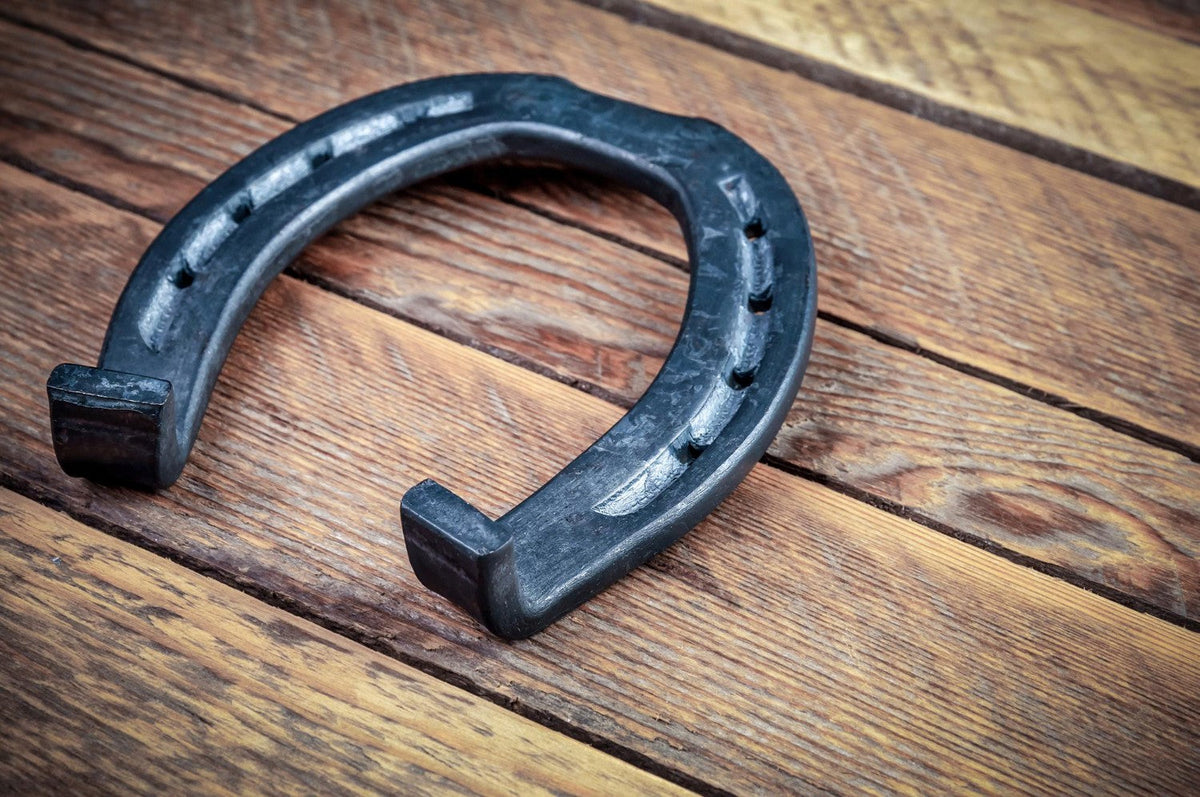
Ask any experienced saddler or farrier what matters most on a horse and you get the same answer: the feet. Horse shoes are one of the oldest pieces of equestrian equipment still in daily use, and in South African conditions - hard summer veld, rocky trails, abrasive sand arenas - they earn their keep. But horse shoes are not automatically right for every horse. Knowing what they do, which type suits your horse's work, and how to look after the foot between farrier visits is what keeps a horse sound.
This guide covers the practical side of horse shoes: what they do, the main types, how they are fitted, how often they need replacing, and what to watch for in between.
What Horse Shoes Actually Do
A wild horse covering many kilometres a day over abrasive ground wears its hooves down at roughly the same rate they grow. A domestic horse rarely does. It stands on softer footing, works in concentrated bursts and carries weight its ancestors did not. Horse shoes rebalance that equation.
Protection against wear
The hoof wall grows roughly 6 to 10mm a month. A horse working daily on gravel roads, hard-baked ground or tarmac can wear the wall away faster than it grows, leaving the sole bearing weight it was never designed to carry. That is when you see footsoreness, bruising and abscesses.
Grip and traction
Steel bites into firm ground better than an unshod hoof, and the shoe can be adjusted for the surface. Studs screwed into the heels give jumpers and eventers purchase on grass, while a plain flat shoe suits arena work. If your horse slips on the flat or scrambles on takeoff, traction is worth raising with your farrier.
Support and correction
Shoes can redistribute load away from a damaged structure, change breakover, raise the heels to ease strain on the deep digital flexor tendon, or stabilise a cracked wall. This is prescription work and should always be done by a qualified farrier, ideally in consultation with your vet.
Does Your Horse Actually Need Shoes?
Not every horse does. Plenty of South African horses live and work barefoot very successfully, particularly those on varied natural terrain that conditions the foot, or in light work on soft going. A well-managed barefoot horse trimmed every six weeks is often better off than a shod horse with neglected feet.
Shoes usually become worth it when one or more of these apply:
- The horse is in regular work on hard or abrasive going and is wearing hoof faster than it grows.
- The horse is footsore on stones or gravel despite a correct trim.
- The horse competes in a discipline where traction matters.
- There is a conformational or pathological problem your farrier and vet want to address.
Many owners run a compromise: shoes in front only, where roughly 60% of the horse's weight sits, and bare behind. It is a sensible middle ground for a lot of general riding horses.
Types of Horse Shoes
Standard steel shoes
The workhorse of the industry, and what most horses wear. Mild steel is tough, affordable, easy to shape and reshape, and lasts a full cycle in normal work. Front and hind shoes are different shapes: fronts are rounder, hinds more oval and often slightly pointed at the toe. When you buy horse shoes you buy them specifically as front or hind.
Aluminium shoes and racing plates
Lighter than steel, which matters when you are asking a horse to move fast or lift its limbs high. They reduce weight at the end of the limb, but wear far quicker and are not suited to roadwork or general hacking.
Bar shoes
A bar shoe has a closed heel joining the two branches. Egg bars, heart bars and straight bars each load the back of the foot differently and are used for navicular issues, collapsed heels and laminitis support. Therapeutic, not general-purpose.
Rim and grooved shoes
A groove or raised rim around the shoe gives extra grip on softer ground without needing studs. Common in western and speed disciplines.
Glue-on shoes and hoof boots
Where a hoof wall is too damaged to take nails, glue-on shoes are an option. For barefoot horses needing protection for a particular ride, hoof boots are simpler. Our guide to which horse boots your horse actually needs covers over-reach and brushing boots, which matter a great deal for shod horses.
How Horse Shoes Are Fitted
The farrier pulls the old shoe, trims excess growth with nippers, levels the wall with a rasp, then fits the shoe. Nails are driven up through the insensitive outer wall and out the side, and the protruding ends are twisted off and turned over into clenches that hold the shoe firm. Done correctly the horse feels nothing.
There are two approaches. In cold shoeing the shoe is shaped at ambient temperature to fit the trimmed foot. In hot shoeing it is heated in a forge, shaped, and briefly seated against the hoof to burn a level bearing surface, giving a more precise fit. Hot shoeing generally produces the better result, but a skilled farrier does good work either way. The Wikipedia entry on horseshoes traces how these methods developed.
If you are a farrier or an owner who keeps kit on hand, our farrier collection carries shoes, nails, rasps, nippers, pullers, hoof knives and aprons.
Horse Shoe Sizes
Horse shoes are sold by numbered size and by front or hind. Common sizes run from 000 for small ponies through 00, 0, 1 and 2 for most riding horses, with larger sizes for heavier types. A horse shod all round needs a pair of fronts and a pair of hinds, and those are not always the same number.
Do not guess sizes without measuring, and do not assume both front feet are identical, because many horses are not symmetrical. Your farrier will know what your horse takes, and it is worth writing it down.
The Shoeing Cycle: How Often?
Most horses need attention every four to eight weeks, six being a common average. The right interval depends on how fast the horse grows horn, the work it does and the season. Hooves grow faster in warm wet months, so many South African owners shorten the cycle over summer and stretch it slightly in winter.
Leaving shoes on too long is a genuine welfare issue. As the hoof grows the shoe migrates forward and the heels become unsupported, changing the angles of the whole limb and increasing strain on tendons. A long toe with a collapsed heel is one of the most common preventable causes of lameness.
Signs a Shoe Needs Attention
- Risen clenches. Nail ends standing proud of the wall mean the shoe is loosening, and they can cut the opposite leg.
- A sprung or shifted shoe. One branch pulled away from the wall, or the shoe sitting twisted.
- Clicking or ringing on hard ground.
- Excess toe length with the shoe sitting back from the toe.
- A lost shoe. Pull the opposite shoe or boot the foot rather than working the horse unbalanced.
Looking After Feet Between Shoeings
Shoes protect the wall, but everything else is on you. Pick the feet out daily, including around the frog and the collateral grooves where thrush takes hold. Check for stones packed under the shoe and run your hand over the clenches while you are down there.
Dry South African conditions are hard on horn, and a good dressing helps keep the wall flexible so it holds nails rather than crumbling around them. Our hoof care range covers oils, hardeners, thrush treatments and poultices, and if you are unsure which product does what, our article on Stockholm tar, hoof oil, hoof balm and hoof hardener sorts them out. Horn quality is also built from the inside, so a biotin-based product from our supplements range is worth considering for horses that struggle to hold shoes.
Shod horses are also more likely to strike into themselves, so over-reach and brushing boots from our boots and bandages collection are a sensible precaution, especially for jumping and fast work. A good hoof pick in every grooming kit is non-negotiable. For further background reading on hoof health and the conditions that affect it, the British Horse Society's hoof care guidance is a solid, well-referenced resource.
Getting the Right Horse Shoes
Good shoeing comes down to a good farrier, a sensible cycle and an owner who watches the feet in between. What we can do is make sure the kit is there when you need it. Solo Saddlers has supplied South African farriers and horse owners for over 35 years, and we stock horse shoes in front and hind sizes, nails and the full range of farrier tools, alongside everything you need for day-to-day hoof care.
Browse the farrier collection for shoes and tools, or the hoof care collection for what goes on between visits. If you are not sure what your horse takes, get in touch - our team ride, compete and shoe horses themselves, and we are happy to help.


