
Horse Halter Guide: Rope, Nylon or Leather, and How to Fit One Properly
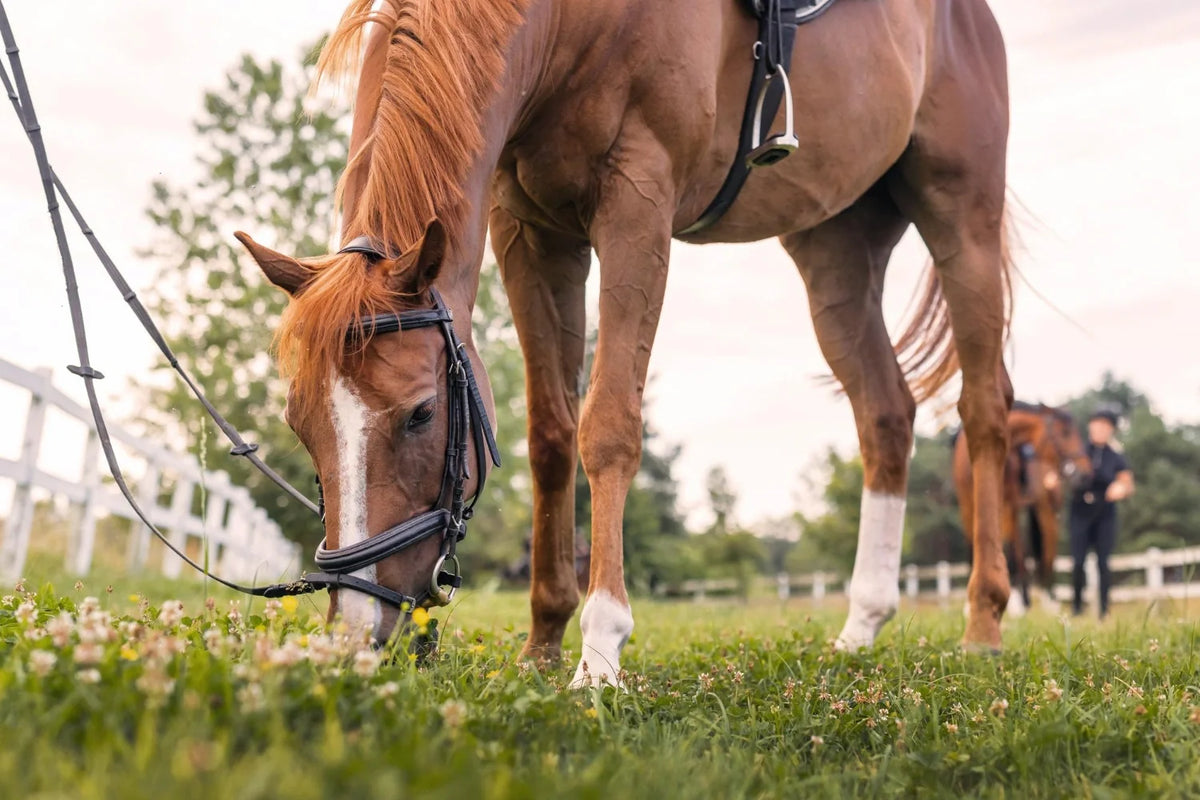
A horse halter is the most-used piece of tack on any yard. It goes on before the grooming kit, before the saddle, before the farrier arrives, and it is what you are trusting when you lead a fresh horse past the arena on a windy morning. It is also the piece most riders buy on price alone. After thirty-five years of making saddlery in South Africa, we have had plenty come back to us, almost always for the same three reasons: the wrong material for the job, the wrong size, or a fit nobody checked.
This guide covers how rope, nylon, leather and biothane compare in real yard conditions, how to size and fit a halter, and the turnout safety question that still divides most livery yards.
What a Horse Halter Is Actually For
A halter, or headcollar, sits behind the poll and around the muzzle: a crownpiece, a noseband, cheekpieces, a throatlatch and a ring under the jaw for the lead. Unlike a bridle it has no bit and no reins, because it is a ground-handling tool rather than a riding one. That distinction matters. It is far safer to tie a horse in a halter than a bridle, since a bit in the mouth of a horse that pulls back can do serious damage in seconds. The Wikipedia entry on halters covers the anatomy in more detail.
Everything else follows from that. A halter has to hold a horse for the vet, tie safely at a show, load onto a truck and lead reliably. Four different jobs, which is why most yards end up with more than one halter per horse. For the ridden side, see our guide to horse bridle types and fitting and the bridles and reins range.
Rope, Nylon, Leather or Biothane: Choosing the Right Horse Halter
Material is the first real decision, and it deserves more thought than colour. Each of the four common options behaves differently under pressure, and that is the point.
Rope halters
A rope halter is knotted rope with no hardware and no padding. Because the rope is thin and the knots sit over sensitive points on the nose and poll, pressure is concentrated rather than spread. That makes it precise for groundwork and for horses that lean on a broad noseband. It is also unforgiving: never tie a horse solidly in one, and never leave it on in the paddock. Use it for schooling in hand, then take it off.
Nylon webbing halters
Nylon is the everyday workhorse: affordable, colourful, quick to wash and effectively unbreakable. That last point is both the strength and the risk. It will hold a horse that has thrown itself backwards, which is what you want at the wash bay and exactly what you do not want if a horse gets a foot or a fence post through it in the field. Buy nylon for daily leading, tying and travelling, with padding at the noseband and poll if the horse wears it for long stretches.
Leather halters
A good leather halter is the traditional turnout choice for a reason. Leather has give, and under genuine emergency load a well-made one will part at the stitching or buckle before the horse's neck takes the strain. It ages well and moulds to the horse, but it needs looking after with regular cleaning and oiling. It is also a great and smart looking choice for shows.
Biothane halters
Biothane is coated webbing that handles like leather, hoses off like nylon and shrugs off sweat, mud and river crossings without going hard or rotting. It has become the default in endurance and trail riding here, and in a wet Highveld summer it is close to maintenance-free. If your horse lives out or gets wet regularly, biothane is usually the answer.
Our halters and leads range carries all four, from foal slips through to heavy leather and chain cattle halters.
Getting the Size Right
South African halters are generally sized S/Pony, M/Cob, L/Full and XL, with foal, mini and yearling sizes below that. Cob suits most riding horses of 15 to 16 hands, Full suits bigger warmbloods and thoroughbreds, and XL is for the very large or coarse-headed horse. Arabs often need a size smaller than their height suggests because of the fine, dished head, while a heavy cob or draught cross can need a size up.
Youngstock are what people get wrong. Foals and yearlings grow through headgear fast, so check a growing horse's halter monthly rather than annually.
How to Fit a Horse Halter Properly
Once the halter is on, run these four checks. They take fifteen seconds and prevent most of the rubs, sores and escapes we hear about.
- Noseband height. It should sit roughly two fingers below the protruding cheekbone. Too high and it presses into the bone; too low and it sits on the soft cartilage of the nose, where it restricts breathing and can be pulled off over the muzzle.
- Noseband width. Two fingers should slide comfortably between the noseband and the face all the way round. Any looser and a hoof or gate latch can get through it.
- Throatlatch. A flat hand should fit between the strap and the throat. This is what stops the halter coming off over the ears, so it needs to be snug without pressing on the windpipe.
- Crownpiece. It should sit just behind the ears, flat and untwisted, with no buckle or knot directly on the poll.
The Turnout Question: Should the Halter Stay On?
This is the one that starts arguments. Leaving a halter on in the field makes catching easier and is useful with a difficult or newly arrived horse. It also means the horse is wearing a loop of material that can catch on a fence, a branch, a gate or its own hind shoe.
The compromise most yards settle on is simple: if a halter stays on unsupervised, it must be one that will break. That means leather, or nylon fitted with a breakaway crownpiece or leather safety tab. A plain nylon halter on a turned-out horse is the one combination we would always advise against. For broader management guidance, the British Horse Society's horse care and welfare resources are a solid reference.
Matching the Lead to the Halter
The lead is half the system and usually an afterthought. Cotton and padded webbing leads are kind on the hands and right for everyday leading. Braided rope leads carry more weight and feel, which helps in groundwork where the rope has to send a signal down its length. Chain leads control stallions, breeding stock and cattle, and should run over the noseband or under the jaw, not through the mouth.
And never wrap a lead around your hand. Fold it, hold the fold, keep the loop free. It is the most common cause of serious hand injuries in a yard.
Show Halters and In-Hand Classes
A show halter is a different animal: narrower leather, rolled or stitched detailing, sometimes a brass or diamante trim, and a close fit that shows off the head. They are typically offered in Foal/Pony, Cob and Full, often with a choice of chin strap or throatlatch fitting. Keep it out of the mud and it will last a decade. The rest of the in-hand kit sits in our showing collection.
Cattle and Working Halters
Not every halter on a South African farm goes on a horse. Cattle halters are built heavier, with a longer nose and a chain or heavy lead, and rope-and-chain, nylon-and-chain and double leather versions offer different levels of control. Buy these at working strength, as with shipping halters, which take a hammering in a moving truck.
Looking After Your Horse Halter
Nylon and biothane need almost nothing: rinse the mud off, hang them to dry, check stitching and hardware every few weeks. Leather rewards attention. Wipe sweat and grease off after use, clean it properly every few weeks, and feed it before it dries out, particularly through a dry Highveld winter. Our article on dubbin and when to use it explains which product suits which job, and the leather care range covers soaps, oils and conditioners.
Check the hardware too. Buckles, clips and rings fail more often than the halter itself, and a bent snap clip is a real hazard. While the halter is off, run a brush over the horse and check for rubs behind the ears and across the nose; our grooming range covers that.
Choosing Your Next Horse Halter
Work backwards from the job. Rope for groundwork, nylon for the yard and the truck, leather or a breakaway for turnout, biothane for wet and long days. Size it to the head rather than the height, fit it with the four checks above, and match the lead to the situation.
Solo Saddlers has been making halters and leads in South Africa for thirty-five years, and the range is built and tested by people who ride, compete and work stock themselves. Browse the halters and leads collection to find the right horse halter for your yard, or get in touch and we will help you match material and size to the horse.


