
Jodhpurs Explained: Fit, Fabric, and How to Choose the Right Pair
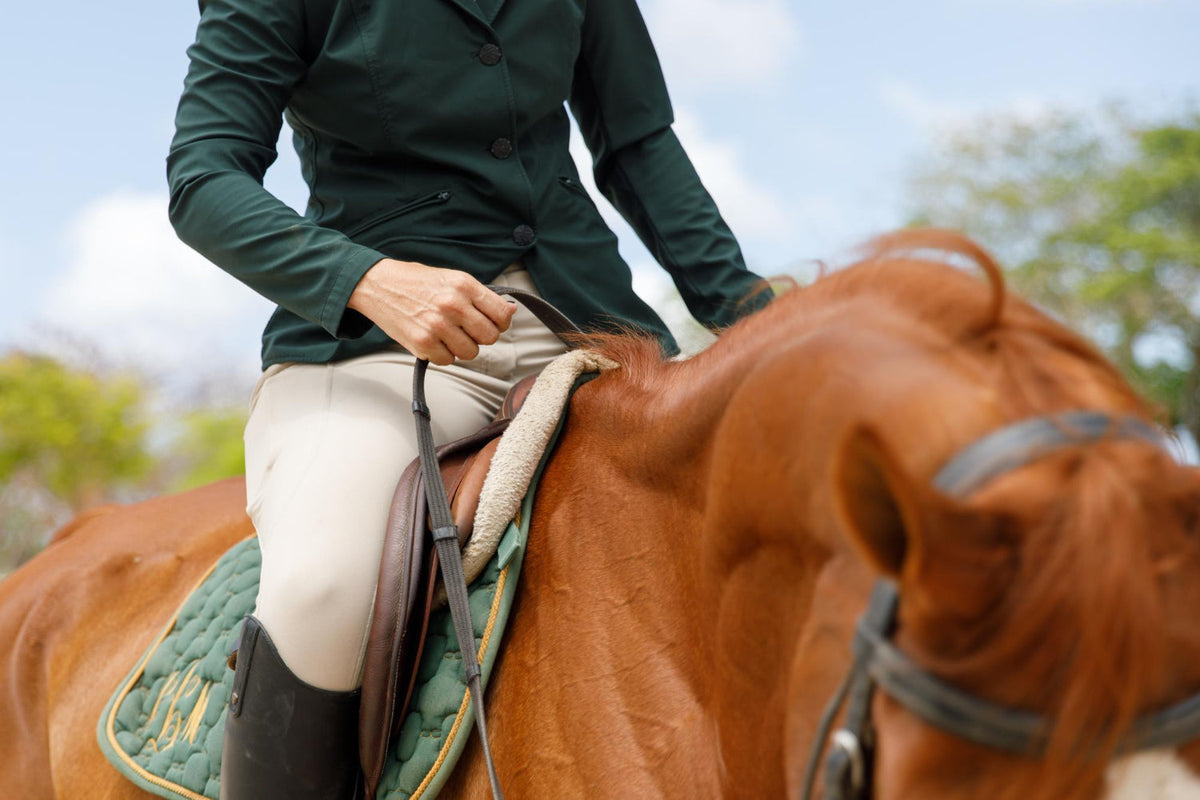
Ask ten riders what they wear in the saddle and you will get ten answers about saddles, bits and boots. Ask what they actually pull on every single day and the answer is almost always the same: jodhpurs. They are the most-used item in a rider's wardrobe, the one piece of kit that touches the saddle for every minute of every ride, and the one most people buy badly the first time round. A pair that grips, breathes and stays put will make you a quieter, more effective rider. A pair that twists, rides up or slips on the flap will fight you for the whole session.
This guide covers what jodhpurs are, how they differ from breeches, how they should fit, what to look for in fabric and grip, and what to wear with them.
What jodhpurs actually are
Jodhpurs are trousers built specifically for riding. They run the full length of the leg to the ankle, sit close through the calf, and are cut with a higher, more generous rise than ordinary trousers so that they stay put when you fold at the hip into a two-point or a sitting trot. Critically, they have no thick inside leg seam. As the British Horse Society puts it, jodhpurs are trousers specially designed for riding, and a seam on the inside leg will pinch your leg while you are in the saddle. That single detail is why a pair of jeans is miserable after forty minutes and a pair of jodhpurs is not.
Where the name comes from
The name is not marketing. Jodhpurs are named after the city of Jodhpur in Rajasthan, adapted from traditional Indian dress and popularised in England from around 1890 by Pratap Singh. The original silhouette flared dramatically at the hip and thigh, then gripped tight from the knee down. Modern stretch fabrics have slimmed the flare away almost completely, but the underlying logic survives: room where your hip needs to open, close fit where your leg needs to talk to the horse. You can read the full history on Wikipedia's entry on jodhpurs.
Jodhpurs versus breeches: the difference that matters
Most riders use the two words interchangeably, and in a tack shop nobody will blink. Technically they are different garments, and the difference is entirely about what goes on your feet.
- Jodhpurs run all the way to the ankle and are worn with short boots, usually jodhpur or paddock boots, often with half chaps or gaiters over the top.
- Breeches stop at mid-calf, usually with a velcro or elasticated cuff, and are designed to disappear underneath a tall riding boot.
Neither is better. It is a question of what boots you own and what your discipline expects. If you are buying your first serious set of riding kit, jodhpurs plus short boots plus half chaps is the more flexible and generally more affordable route, and it is easier to size for a growing child. Have a look at our Jodhpurs Solo and the full Clothing range to compare jodhpurs, breeches and riding leggings side by side.
How jodhpurs should fit
Fit is where most of the value sits, and it is worth being fussy. Try them on and then, if you can, squat down on your haunches to test the fit
Waist and rise
The waistband should stay put when you tip forward. If it gaps at the back in two-point, the rise is too low for your body. Higher-waisted cuts have become the default for exactly this reason: they hold their position through the hip fold instead of sliding down. There should be no pinching at the front when you sit deep.
Seat and thigh
Snug, not compressed. You want the fabric to move as one piece with your leg rather than bunching into folds under the saddle flap. Wrinkles behind the knee are the classic sign of a pair that is too long in the leg or too generous through the thigh, and they will rub on a long ride.
Lower leg and ankle
This is what separates jodhpurs from any other trouser. The lower leg should be close enough that it slides cleanly inside a half chap or a boot without folding over on itself. Too loose and it will wrinkle under your gaiter and rub a blister into your calf. Too tight and it will creep upwards every time you rise to the trot.
Grip: knee patch or full seat
Modern jodhpurs come with a grip panel, and the two common patterns suit different riders.
Knee patch jodhpurs place the grip on the inside of the knee only. They suit jumping, hacking and general riding, where you want a secure lower leg but still want to be able to shift your seat freely in the saddle. They are the sensible all-round default.
Full seat jodhpurs run the grip across the seat and down the inside of both legs. They are the dressage rider's choice, holding you deep and still in the saddle through sitting work. The trade-off is that they genuinely stop you sliding, which is a nuisance if you are getting into a light seat for hacking or cross country.
Grip material is usually silicone or suede. Silicone tends to grip harder and wear faster; suede is softer, quieter against the saddle and generally kinder to the leather of your saddle flap.
Fabric and weight for South African riding
Most of us ride through summers that punish anything heavy. Look for a fabric with genuine four-way stretch and a decent moisture-wicking finish, because a cotton-heavy pair that soaks and stays wet will chafe. Lighter, more open weaves earn their keep from October through to March. A slightly heavier weight is worth having in the cupboard for Highveld winter mornings, but for most SA riders a breathable mid-weight pair does the majority of the year.
On colour: pale beige and white look superb in the ring and show every mark on the yard. Navy, black and grey are the practical everyday choice. Most riders keep one pale pair strictly for competition.
What to wear with your jodhpurs
Boots
Jodhpurs are cut for short boots. A jodhpur or paddock boot with a defined heel is the correct partner, and the heel matters more than the look: it is what stops your foot sliding through the stirrup. Browse the Riding Boots range to match a pair to your jodhpurs.
Half chaps and gaiters
Half chaps over jodhpurs give you the leg protection and the close contact of a tall boot at a fraction of the price, and they are far easier to replace as a child grows. Our guide to choosing chaps and gaiters covers the different types in detail, and the Chaps and Gaiters collection has the current range.
Jodhpur straps / clips
A small item that solves a specific irritation. Jodhpur straps are elastic straps that pass under the arch of your boot and hold the bottom of the leg down so it cannot ride up your calf mid-ride. If your jodhpurs keep creeping, this is the cheapest fix there is.
Also a must have for the showing Sanesa classes - where half chaps are not supposed to be worn.
Jodhpurs for children
Children grow out of jodhpurs faster than they wear them out, so buy for fit now rather than for a season's growth. Oversized jodhpurs wrinkle badly under half chaps and teach a young rider to grip with the wrong part of the leg. A darker colour, a generous stretch content and a pull-on waistband will survive pony club better than anything pale and structured.
Showing and competition
Turnout rules vary by discipline and by the body running the class, so check the current rule book for the classes you enter rather than assuming. As a general pattern, dressage and showing favour pale jodhpurs with a show shirt and jacket, while working hunter and cross country allow more latitude. Our Showing collection brings the competition kit together in one place.
Whatever the class, the hat rules are not negotiable and are worth getting right. If you are due a replacement, read our guide to choosing a riding helmet before you buy.
Caring for jodhpurs
Grip panels fail first, and heat is what kills them. Wash cool, inside out, and skip the tumble dryer entirely: silicone will lift and peel if you cook it. Avoid fabric softener, which coats the fibres and dulls both the grip and the wicking. Line dry out of direct sun.
Choosing your next pair
Buy for fit first, grip second, colour last. Get the rise right for your body, get the lower leg close enough to sit cleanly inside a half chap, and choose knee patch unless you are doing serious sitting work. Everything else is preference.
Solo Saddlers has been supplying South African riders for decades, and we stock jodhpurs, breeches, riding leggings and the boots, straps and half chaps that go with them. Browse the Clothing range or the wider Horse Riding Gear collection, and if you are unsure about sizing, get in touch. We would rather spend five minutes helping you get the fit right than have you send a pair back.


