
How to Choose a Horse Saddle: A South African Buyer's Guide
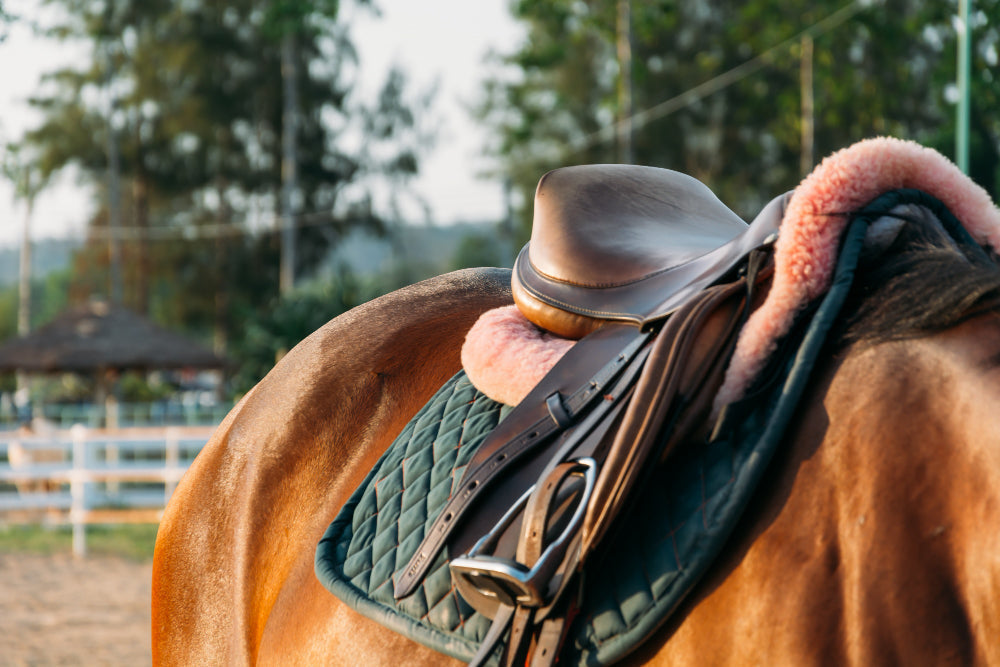
A saddle is the single biggest piece of equipment most riders ever buy. It shapes your position in the saddle, your horse's comfort over a ride, and how you feel about every session you do together. Get it wrong and nothing else works; get it right and it's the quiet foundation of years of good riding. This guide walks through the questions we'd ask if you called us up asking for advice — in the order we'd ask them.
Start with the discipline
The single most useful question is: what do you mainly do with your horse? A saddle built for dressage is built around different priorities from one built for jumping, and neither suits a trail rider spending six hours in the hills. Get the discipline right first — everything else follows.
- Dressage saddles — deep seat, long straight flap, long girth straps. Built to help you sit deep with a long leg.
- Jumping saddles — flatter seat, forward-cut flap, pronounced knee blocks. Built for a shorter stirrup and a balanced forward position over fences.
- General purpose (GP) saddles — moderate seat, moderately forward flap. The compromise saddle that does 80% of dressage and 80% of jumping. The right choice for most riders who don't specialise.
- Endurance, trail and western saddles — wider panels and deeper, more supportive seats built for long hours in the saddle rather than arena work. See our trail saddles guide for a deeper look.
- Pony saddles — scaled versions of the above for smaller riders and narrower-backed ponies.
If you're still deciding between disciplines or riding a young horse whose direction isn't yet set, a GP saddle is almost always the right first answer.
English or Western — the big structural choice
Almost every saddle on this page is an English saddle: a light, minimalist design with a short flap, standard billets, and a specialised seat built around a single discipline. That suits South African arena riding, Pony Club, and most trail work. A Western saddle is a different animal — a heavy, wide-panelled saddle with a horn, a longer, deeper seat, and fenders rather than stirrup leathers. It distributes the rider's weight over a larger area of the horse's back, which is why it's the default for ranch work and long-distance trail riding.
As a rough rule: if you're competing in any English discipline, or you ride in a ring more than an hour a week, buy English. If your riding is mostly cattle work, long-distance trails, or Western-style pleasure riding, buy Western. Some South African riders own both.
Match the saddle to your horse
This is the part riders most often get wrong. A beautiful saddle that doesn't fit the horse is useless — and worse than useless, because it causes behavioural problems, back pain, and lameness over time. Four things to check:
- Tree width — the saddle's internal frame has to match the horse's shoulder angle and wither. Narrow, medium and wide are the usual options; some modern saddles have adjustable gullets.
- Panel contact — the panels (the cushions under the saddle) must make even contact from front to back. Gaps or bridging mean pressure points.
- Balance — the saddle should sit level on the horse's back. A saddle tipping forward or back means the tree is wrong for the horse.
- Shoulder clearance — when the horse's shoulder moves forward in the trot, the saddle must not pinch or restrict it. Check with the horse in motion, not just standing still.
A trained saddle fitter assesses these in about 20 minutes. It's cheap insurance against a R20,000+ mistake.
Match the saddle to the rider
Rider fit matters less than horse fit, but it's not nothing. The two measurements to get right:
- Seat size — typically 16.5" (children), 17" (small adult), 17.5" (most adult riders), 18" (taller or heavier riders). A seat that's too small pushes you forward; too big lets you slide around.
- Flap length — your knee should sit roughly a hand's width above the bottom of the flap. Tall riders with long thighs often need a long or extra-long flap.
If you're between sizes, err towards the larger — you can always add a sheepskin seat cover, but you can't shrink the saddle.
Budget and what it buys you
Saddle prices in South Africa roughly break into three tiers:
- Entry level (R8,000–R15,000) — new synthetic or basic leather saddles. Good fit is possible at this level but you'll typically sacrifice longevity and resale value.
- Mid-tier (R15,000–R35,000) — well-made leather saddles from established brands, often with adjustable features. The sweet spot for most serious amateurs.
- Specialist / high-end (R35,000+) — competition-grade saddles, often custom or semi-custom. Worth it if you're competing at provincial level or above, or if you have a hard-to-fit horse.
Whatever your budget, build in a line item for a professional saddle fitting before you commit. It's the best R500–R1,000 you'll ever spend.
New or second-hand?
Second-hand saddles can be excellent value — a good leather saddle is often better after five years of use than fresh out of the box. Two caveats:
- Fit the horse, not the saddle — never buy a saddle because "it's a steal", only because it fits your horse. A R5,000 bargain that doesn't fit costs more than a R20,000 saddle that does.
- Check the tree — a cracked or broken tree makes the saddle unsafe and effectively worthless. Ask the seller, or have it checked by a saddler before purchase.
Fit trumps everything else
If there's one line to take away: a correctly-fitted entry-level saddle will serve you and your horse better than a world-class competition saddle that doesn't fit. Get the horse assessed, get the saddle assessed, match the two, and only then worry about the badge on the cantle.
Once you've got the saddle, finish the kit properly: pair with a well-fitting girth (see our girth size chart), a correctly-shaped saddle pad, and appropriate stirrups and leathers.
Get expert help
Solo Saddlers has been in the South African saddlery trade for 35 years. Our staff ride across endurance, jumping, trail and racing, and we've seen every fit problem you can imagine. If you're choosing a saddle — new or secondhand, first or fifth — talk to us before you buy. Honest advice and no sales pressure.
Browse the full saddles collection to get started, or narrow straight to your discipline: dressage, jumping, GP, endurance & trail, pony.
Frequently Asked Questions
What's the most important thing to look for when choosing a saddle?
Fit on the horse. A saddle that doesn't fit your horse will cause pain, bad behaviour and long-term physical damage, no matter how good it is otherwise. Get a professional saddle fitter to assess both horse and saddle before you commit.
How much does a horse saddle cost in South Africa?
Entry-level synthetic or basic leather saddles start around R8,000–R15,000, mid-tier leather saddles run R15,000–R35,000, and specialist competition saddles R35,000 and up. Second-hand saddles can offer excellent value if the tree is sound.
Can I use one saddle for dressage and jumping?
A general purpose saddle is designed for exactly this. It won't be ideal for either discipline at a competitive level, but it's perfect for mixed riding, schooling, and Pony Club.
Is a second-hand saddle a good idea?
Often yes — a well-maintained leather saddle can be better after a few years' use than a new one. The key is to check the tree for cracks or damage (ask the seller or have it inspected) and make sure it fits your horse, not just looks right on the rack.
Do I need a saddle fitter if I buy online?
Yes. A saddle fitter isn't replaced by online ordering — if anything, they matter more. Solo Saddlers can help with fitting advice over email or phone before you commit, and can recommend qualified fitters around the country for in-person assessment.
What size saddle do I need?
Most adult riders use a 17.5" seat. A 17" suits smaller-framed adults, 18" taller or heavier riders, and 16.5" or below is for children. Flap length matters separately — tall riders often need long or extra-long flaps regardless of seat size.
English or Western for South African riding?
For Pony Club, arena riding, eventing, dressage and showjumping — English. For cattle work, long-distance trail riding and Western pleasure — Western. See our endurance, trail and Western collection for long-distance options.


