
Horse Spurs: Types, Correct Use and How to Choose the Right Pair
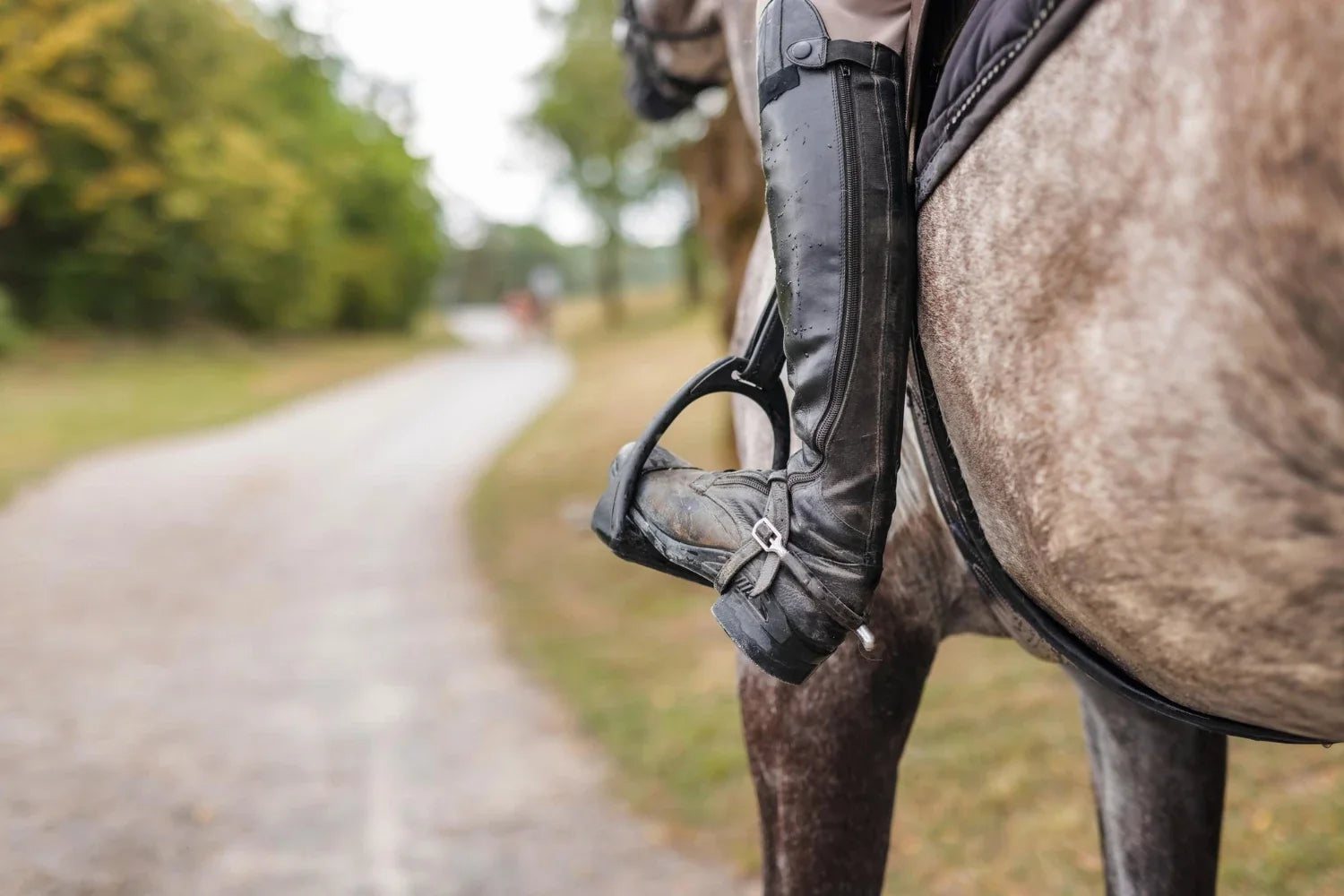
Spurs are probably the most misunderstood piece of kit in a rider's wardrobe. Ask around any yard and someone will tell you that horse spurs are for getting a lazy horse moving, which is precisely what they are not for. A spur is a precision instrument. It sharpens a leg aid you already have, and in the wrong hands it does considerably more harm than good. After thirty-five years of making and fitting saddlery, we have had every kind of spur across the workbench, and the riders who get the most from them are the ones who worked out what they are for before they bought a pair.
What Horse Spurs Actually Do
A spur backs up the natural aids — leg, seat, hands and voice. It does not replace them. Used correctly, it lets you give a smaller, quieter, more specific instruction: move this hindleg over, step under yourself a little more, stay out on this shoulder. The horse should already understand and respond to your leg before a spur enters the conversation.
A horse that ignores the leg has a training gap, and adding metal to the rider's heel does not close it. It usually produces a horse that becomes dull to the spur as well, or one that gets tense and resentful. If your horse is not going forward off the leg, that wants schooling, not hardware. A spur is also only as steady as the leg wearing it: a swinging lower leg jabs the horse every time the rider sits.
The Parts of a Spur
Every spur, from a plain English pair to a heavy Western set, is built from the same three elements:
- The yoke, or heel band — the U-shaped section that wraps around the heel of the boot.
- The shank, or neck — the arm extending backwards from the yoke. Its length and shape determine how much reach and how sharp a cue you get.
- The end — what actually touches the horse: a smooth ball, a flat or rounded knob, a roller, or a rowel (a small revolving wheel with points).
Nearly all the difference between one pair and another comes down to shank length and end design. For a fuller breakdown of the various international patterns, the Wikipedia entry on the spur is a thorough reference.
Types of Horse Spurs
Ball and roller ball spurs
A ball-end spur finishes in a smooth stainless steel sphere. It is the softest common option and the one we most often recommend as a first pair: the rounded end spreads contact rather than concentrating it, so the cue is clear without being sharp. A roller ball takes the idea further: the ball itself turns, so the spur rolls against the horse's side instead of dragging. That rolling action is noticeably kinder on thin-skinned horses and on any horse that has become ticklish through the girth area.
Short shank and long shank spurs
Shank length is about reach, not severity, though the two get confused constantly. A short shank suits a rider with a long leg or a horse with a broad barrel, where the heel already sits close to the horse's side. A long shank suits a shorter-legged rider, or a narrower horse, where the rider would otherwise have to lift the heel awkwardly to make contact at all.
Get this wrong and you create problems. Too long a shank on a rider already close to the horse means constant accidental contact, and the horse learns to ignore it. Too short and the rider distorts their leg position to use it. Sit on the horse, take up your normal position, and see where your heel lands before choosing.
Rowelled and Western spurs
Western spurs are heavier, longer in the shank, and usually finished with a rowel. A rowel looks fiercer than it is, provided it is the right sort: a blunt rowel with plenty of points that turns freely spreads pressure across a wider area and rolls rather than digs. Rowels used in Western disciplines are deliberately dull and must spin freely for exactly this reason. A seized rowel, or one with few sharp points, is genuinely harsh and has no place on a horse.
Western spurs are also worn lower on the boot, often with a decorative strap. If you ride Western, you will find them alongside the rest of our Western riding gear.
Spur Straps: The Part Everyone Forgets
A spur is useless without a strap, and the strap is where most riders under-spend. It takes the working load, sits against the boot, and is the first thing to fail. Leather straps mould to the boot over time and look right in the showring; nylon is tougher in wet conditions and a sensible choice for hacking and general schooling. Double straps give a more secure hold and a cleaner look for showing.
Whichever you choose, the buckle belongs on the outside of the foot. A buckle on the inside rubs against the saddle flap and will eventually mark it. Replace a strap the moment it starts to crack or stretch — a spur that slips over the heel mid-ride is a nuisance at best.
How to Fit and Wear Spurs Correctly
- The yoke should sit snugly around the heel of the boot without pinching. Too loose and it rotates; too tight and it distorts.
- The spur sits on the spur rest — the small ledge above the heel on most riding boots. If your boots have one, use it.
- The shank points slightly downward, never up. An upward-angled spur digs in exactly when you least intend it to.
- The strap buckle sits on the outside of the foot.
- Once mounted, check that in your normal riding position the spur is not touching the horse. It should only make contact when you deliberately turn your heel in.
That last point separates a spur used as an aid from a spur used as a permanent irritation. If you are in constant contact, either the shank is too long or your leg position needs work. Boots matter too — one with a proper spur rest and a firm heel holds a spur far better than a soft one. Our riding boots range is worth a look if you are building a set-up from scratch, and our guide to riding chaps and gaiters covers how the leg wear itself should fit.
When Is a Rider Ready for Spurs?
There is no level that automatically qualifies someone. The honest test: can you keep your lower leg still, independent of your seat and hands, through transitions and over uneven ground? If your heel bounces when the horse trots, you are not ready, and no amount of good intention will stop the horse being poked.
If you are unsure, ride in a pair on the lunge and have someone watch your leg from the ground. Note too that most competitive bodies set rules on permitted spurs, including limits on shank length and rowel design, with penalties where spurs have been used abusively — check the rules for your discipline before competing in a new pair. The British Horse Society's horse care and welfare guidance is a sound general reference on responsible use of equipment.
Looking After Spurs and Straps
Stainless steel spurs are close to maintenance-free, which is why we make ours in it — rinse the mud off, dry them, and they will outlast several sets of straps. The leather is what needs attention. Sweat and dust are hard on a spur strap, and the section against the boot takes a beating. Clean and condition leather straps along with the rest of your tack; anything in our leather care range will do the job. Check the buckle tongue and stitching every few weeks, and keep a spare set in the tack box.
Which Spurs Should You Buy First?
Start soft and short. A stainless steel ball spur, in a shank length that suits your leg on your horse, is the sensible starting point for almost every English rider — a clear aid with a wide margin for error while your leg settles. Add a roller ball if your horse is sensitive. Move to a knob or flat end only if you genuinely need a more defined cue, and be honest about whether the issue is the equipment or the schooling.
Western riders should match the spur to the discipline and to the rest of the tack. Our guide to Western saddles covers how the whole set-up fits together.
Talk to Us
Solo Saddlers has been designing and manufacturing saddlery in South Africa for over thirty-five years, and the people who answer the phone are riders — endurance, jumping, trail and racing. If you are not sure which shank length suits your leg, or whether a ball or roller ball is right for your horse, ask us. It takes two minutes and saves buying the wrong pair twice.
Browse our full range of spurs and spur straps in the rider clothing and accessories collection, or explore saddle accessories for everything else that finishes the set-up.


